Choosing an ideal Retail Management Software for your business

Published:
Last Updated:
The retail industry today stands at the crossroads of digital transformation. With rising customer expectations, the evolution of omnichannel retailing, and constant market disruptions, managing retail operations has never been more complex — or more exciting.
Gone are the days when running a retail business was limited to stocking shelves, handling billing, and maintaining ledgers manually. Today’s retailers operate in an environment driven by data, technology, and customer experience. Whether you’re managing a single boutique or a chain of stores across multiple cities, you need a system that gives you complete control over your operations — from inventory to sales, from supply chain to customer engagement.
This is where Retail Management Software (RMS) comes in. An RMS serves as the central nervous system of your retail business. It unifies all key functions — inventory management, billing, customer relationship management, reporting, accounting, and analytics — into one powerful solution.
However, choosing the right RMS can be challenging. With hundreds of options available in the market, each promising to revolutionize your business, how do you know which one truly meets your needs?
To simplify this process, let’s focus on three critical features that every retailer must look for before investing in a retail management software solution.

Want a smarter way to manage inventory, sales, supply chain, and customer experience?
1. It Handles a Wide Range of Merchandise
Understanding the Complexity of Retail Inventory
Retailers deal with an incredibly diverse product landscape. Whether you are in fashion, electronics, grocery, or home décor, your merchandise may vary in brand, size, color, model, or configuration. Managing such complexity manually or with a basic POS system often leads to errors, stock discrepancies, and poor decision-making.
For example, imagine a lifestyle retailer managing thousands of SKUs across categories such as:
- Apparel: Shirts, dresses, jeans, ethnic wear, and outerwear.
- Footwear: Casual, formal, athletic, and seasonal varieties.
- Accessories: Bags, watches, jewelry, and belts.
- Home Furnishings: Bedsheets, curtains, rugs, and décor items.
Each of these categories has multiple variants, making real-time inventory visibility a necessity — not a luxury. A small mistake, such as overstocking low-selling items or understocking fast movers, can directly affect profit margins and customer satisfaction.
The Role of Retail Management Software in Merchandise Control
An ideal retail management software should map every product accurately, capture all variants and attributes, and update the stock status across every sales channel in real time.
Ginesys’ Inventory Management Module, for example, allows retailers to manage thousands of SKUs effortlessly. It supports hierarchical categorization — department, category, subcategory, brand, and size — helping teams track every item with pinpoint accuracy.
Key benefits of having advanced merchandise management features include:
- Real-Time Stock Visibility: View current stock levels at the store, warehouse, or across the entire chain instantly.
- Automatic Replenishment: Set reorder points so that fast-moving products are restocked before they run out.
- Barcode Integration: Simplify product tracking and reduce manual entry errors.
- Multi-Dimensional Reporting: Analyze sales and stock data across product lines, vendors, and regions.
Real-Time Inventory: A Game Changer
Real-time inventory tracking has become a defining factor for retail success. When a product is sold in one location, the software should automatically update the central system, reflecting accurate stock levels across all connected stores and online channels.
For instance, when a customer buys a pair of sneakers in Mumbai, the system should immediately reflect the change in available quantity — so that another store or your eCommerce platform does not mistakenly show it as in stock.
Ginesys’ real-time inventory management empowers businesses with this agility, ensuring that what you see is always what you have. This level of transparency prevents lost sales, improves order fulfillment, and enhances customer trust.
Inventory Analytics and Decision-Making
An advanced RMS not only manages your stock but also helps you make better business decisions. Through analytics and forecasting tools, retailers can:
- Identify best-selling products and plan promotions accordingly.
- Recognize slow-moving stock and reduce carrying costs.
- Track supplier performance and optimize procurement cycles.
By understanding these patterns, retailers can align their merchandising strategies with customer demand — ensuring the right product is available at the right time and place.
2. It Operates on Different Types of Retail Formats
The Modern Customer’s Shopping Habits
Today’s customers no longer shop exclusively in one format. They may browse products online, check reviews on social media, and then make the final purchase in-store — or vice versa. This fluid buying behavior has given rise to multiple retail formats such as:
- Brick-and-Mortar Stores: Traditional physical outlets.
- E-commerce Websites: Online shopping platforms.
- Franchise Stores: Operated by third parties under your brand.
- Pop-up or Flash Retailing: Short-term physical retail spaces for promotions or testing markets.
- Omnichannel Retailing: Seamless integration of all these channels.
To remain competitive, retailers must meet their customers where they are — and that means operating efficiently across all these formats.
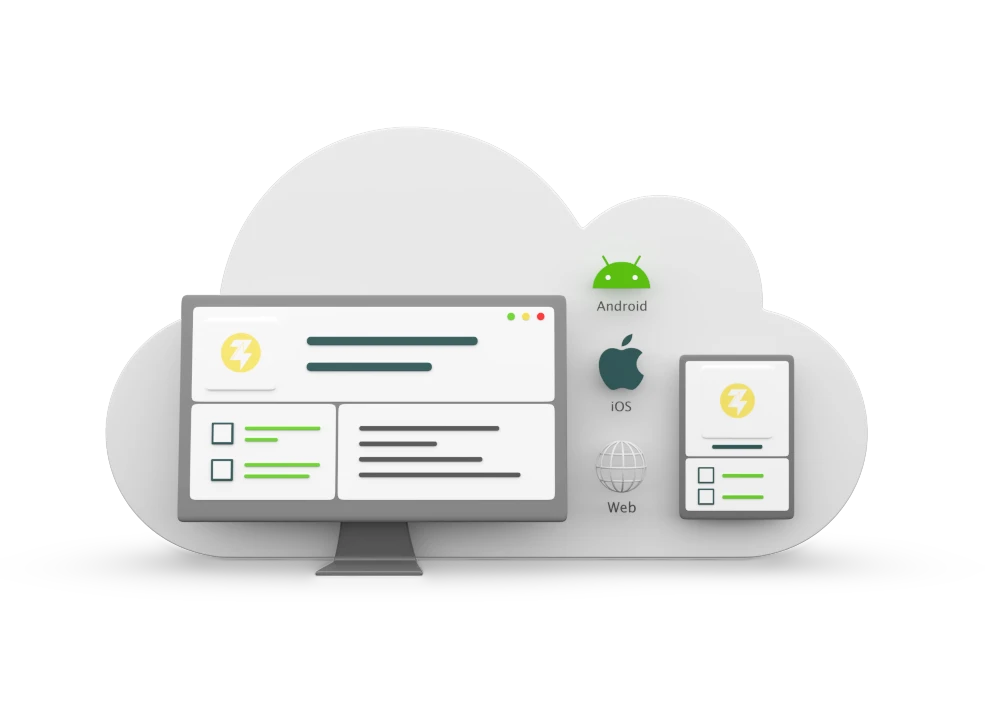
Setting up pop-up stores or expanding via franchise? Ginesys Cloud POS helps you go live instantly with full central control.
Omnichannel Capability: The Cornerstone of Modern Retail Software
An ideal retail management software like Ginesys offers comprehensive omnichannel functionality. It enables retailers to run operations across physical stores, e-commerce portals, and online marketplaces (like Amazon, Flipkart, or Myntra) — all from one unified platform.
This ensures that customers have a consistent brand experience, whether they’re buying from a store, a website, or a mobile app.
Key benefits of an omnichannel-ready retail management system include:
- Centralized Order Management: Process and track all orders from a single dashboard.
- Consistent Pricing and Promotions: Maintain uniform pricing policies and promotional campaigns across all platforms.
- Real-Time Stock Synchronization: Prevent overselling by keeping stock levels updated across every channel.
- Unified Customer View: Track a customer’s interactions, purchase history, and preferences, no matter where they shop.
Franchise and Flash Retailing Management
For retailers expanding through franchise models, the right software provides strong control mechanisms. It ensures data security, consistent reporting, and brand-wide visibility while allowing franchise owners some operational independence.
Similarly, flash retailing or pop-up stores — short-term setups for promotions or new product launches — require mobile-friendly, cloud-based POS systems that can go live quickly and sync back to the main system.
With Ginesys Cloud POS and integration tools, retailers can set up and manage such temporary formats without disrupting their overall operations.
Why Multi-Format Support Matters
Customers today expect flexibility. They might start a transaction online and finish it in-store (Click & Collect), or buy in-store and get it delivered to their home. Managing such scenarios requires deep integration between channels — which only a robust retail management software can provide.
Retailers using Ginesys benefit from a system that bridges the gap between physical and digital, ensuring every transaction is efficient, traceable, and customer-focused.

Ready to simplify operations, improve accuracy, and scale your retail business?
3. It Syncs Data Across Multiple Stores
The Importance of Centralized Data Management
As your retail business grows, you may expand into multiple cities or even countries. With every new store, the complexity of managing data increases exponentially. Each outlet generates its own sales figures, inventory updates, customer data, and employee records.
Without a system that synchronizes this data centrally, inconsistencies and delays are inevitable. This can result in stock discrepancies, poor decision-making, and frustrated customers.
The Need for Seamless Data Synchronization
A capable retail management software should automatically sync sales, inventory, and customer data across all stores in real time.
Imagine a customer earns loyalty points while shopping in Delhi and later wants to redeem them at your Bengaluru outlet. Without synchronized data, this transaction would be impossible — leading to customer dissatisfaction.
Ginesys eliminates such problems through its centralized data architecture, ensuring that all stores, warehouses, and head offices are connected through a single system.
Advantages of Multi-Store Data Synchronization
- Unified Customer Experience: Customers can earn and redeem loyalty points, return items, or exchange products at any store seamlessly.
- Improved Decision-Making: Business owners can view consolidated reports for all stores and make data-driven decisions.
- Operational Efficiency: Automatic syncing removes the need for manual updates, reducing errors and saving time.
- Geographical Flexibility: Managers can access store data remotely from any location, ensuring complete control over operations.
Join India’s top retailers who trust Ginesys for inventory, omnichannel, POS, analytics, and more.
Cloud-Based Systems for Modern Retail
Cloud technology has made real-time synchronization easier than ever. With a cloud-based RMS like Ginesys Cloud, all store-level data is stored and processed centrally. Even if internet connectivity is lost temporarily, the system can continue operating offline and automatically sync data once reconnected.
This ensures business continuity and reliability, regardless of store location or size.
Analytics and Reporting for Multi-Store Businesses
Beyond synchronization, the software should provide detailed analytics — comparing performance between stores, identifying high-performing locations, and recognizing underperforming outlets.
With Ginesys, retailers can generate real-time dashboards showing:
- Daily sales trends across stores.
- Stock availability per location.
- Customer engagement and loyalty redemption rates.
- Gross margin comparisons.
These insights empower decision-makers to act quickly, optimize inventory allocation, and tailor promotions regionally.
Choosing the right retail management software can define the success or failure of your retail business. It’s not just about automating billing or tracking inventory — it’s about building a connected, intelligent, and customer-centric retail ecosystem.
An ideal software solution should:
- Manage a wide range of merchandise accurately and efficiently.
- Operate across multiple retail formats, including e-commerce, franchises, and pop-ups.
- Synchronize data seamlessly across multiple stores and channels.
Ginesys, trusted by some of India’s top retail brands, delivers all these capabilities and more. From comprehensive inventory management to omnichannel integration and centralized reporting, it’s a one-stop solution for growing retailers.
In a world where data drives decisions and personalization defines loyalty, investing in a robust retail management system isn’t just a choice — it’s a strategic necessity.
FAQs: Choosing the Right Retail Management Software
1. What is Retail Management Software (RMS)?
Retail Management Software is an integrated system that helps retailers manage key business operations such as sales, inventory, accounting, purchasing, and customer engagement from a single platform.
2. Why is choosing the right RMS important?
Because it directly impacts your efficiency, profitability, and customer satisfaction. The right system ensures accurate data, seamless processes, and real-time insights.
3. Can small retailers benefit from an RMS?
Absolutely. Cloud-based retail software solutions like Ginesys offer affordable and scalable plans designed for small and medium businesses.
4. What is the difference between POS and RMS?
A POS (Point of Sale) system focuses mainly on billing and transactions, while an RMS covers the entire retail ecosystem — including inventory, supply chain, accounting, analytics, and CRM.
5. How does RMS support omnichannel retailing?
It connects your online and offline sales channels, syncing inventory, orders, and customer data to provide a consistent brand experience.
6. What are the key features to look for in RMS?
Look for real-time inventory management, data synchronization, multi-format support, analytics, and scalability.
7. How does a retail software like Ginesys improve customer loyalty?
By integrating loyalty programs and centralizing data, it allows customers to earn and redeem rewards seamlessly across stores and platforms.
8. Is cloud-based retail software secure?
Yes. Cloud RMS solutions use encrypted servers, role-based access control, and automatic backups to ensure high security and data integrity.
9. Can RMS help with GST and financial reporting?
Yes, modern RMS platforms are GST-compliant and can generate financial statements, tax reports, and reconciliations automatically.
10. How do I choose the best RMS for my business?
Assess your business needs, size, and growth plans. Choose software that offers scalability, local support, and proven performance — such as Ginesys, trusted by leading retail brands.