Cloud ERP for Retailers: From “Far Reach” to the Foundation of Modern Retail Success
Published:
Last Updated:
For a long time, cloud-based ERP systems were seen as something distant—almost aspirational—for most retailers. Back in the early 2010s, conversations around ERP were dominated by on-premise servers, local installations, manual upgrades, and heavy IT dependence. Cloud ERP was often viewed with skepticism: Is it secure? Will it perform? Can it really handle retail complexity?
Those questions made sense at the time.
But retail itself has changed far more rapidly than anyone anticipated.
Today’s retailers are no longer just managing stores. They are managing ecosystems—stores, warehouses, online marketplaces, D2C websites, mobile POS, GST compliance, real-time analytics, and customer expectations that demand speed and accuracy across every channel.
In this new reality, the real question is no longer “Is cloud ERP ready for retailers?”
The real question is:
Can retailers afford not to move to the cloud?
This blog explores how cloud-based ERP has evolved from a “far reach” concept into the default foundation for modern retail, and why platforms like Ginesys ERP Cloud Edition, within the Ginesys One ecosystem, are enabling retailers and wholesalers to operate faster, smarter, and more resiliently than ever before.
Retail Technology Has Fundamentally Changed
Retail technology has reached a turning point.
Managing physical servers, databases, backups, security patches, and manual upgrades is no longer sustainable—especially for businesses that are growing, expanding into new channels, or operating across multiple locations.
Earlier, retailers accepted IT complexity as the cost of doing business. Today, that mindset is rapidly changing.
Modern retail demands:
- Always-on systems
- Zero tolerance for downtime
- Real-time visibility across channels
- Rapid scalability during sale events and festive peaks
- Continuous innovation without disruption
Traditional on-premise ERP systems were never designed for this level of dynamism.
Cloud-native, SaaS-based platforms are.
This is why the future of retail ERP clearly belongs to cloud ERP platforms that eliminate infrastructure dependency and deliver speed, resilience, and continuous innovation.
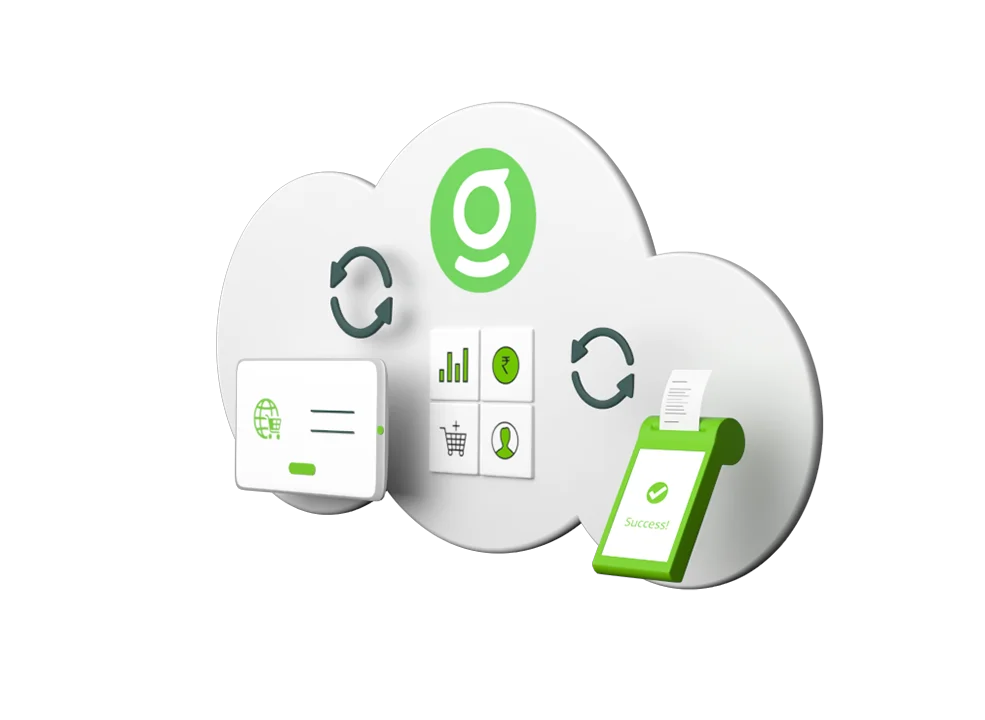
Stop wasting resources on server maintenance. Discover how Ginesys ERP Cloud Edition eliminates your IT burden today.
Why Traditional On-Premise ERP Belongs to a Different Era
To understand why cloud ERP is now the better choice, it’s important to understand what on-premise ERP was originally built for.
Traditional ERP systems were designed at a time when:
- Businesses operated from a single or limited number of locations
- Internet connectivity was unreliable
- Retail was largely offline
- Data volumes were manageable
- Change was slow and predictable
In that context, installing ERP on local servers made sense. But today, on-premise ERP creates more friction than value.
The Hidden Cost of Infrastructure
On-premise ERP requires retailers to manage:
- Physical servers
- Databases
- Backup scripts
- Disaster recovery setups
- Security configurations
- Hardware refresh cycles
This infrastructure does not generate revenue, yet it consumes time, money, and management attention.
For growing retailers, infrastructure becomes a bottleneck rather than a foundation.
The Shift from On-Premise to Cloud ERP: A Strategic Evolution
Moving to cloud ERP is not just a technical upgrade—it is a strategic shift.
It represents a move:
- From owning infrastructure to consuming services
- From manual maintenance to automated reliability
- From static capacity to elastic scalability
- From fragmented systems to unified platforms
This shift mirrors what has already happened in banking, e-commerce, logistics, and consumer technology.
Retail is simply catching up.
From Legacy Systems to the Ginesys Cloud Vision
Modern cloud ERP platforms like Ginesys ERP Cloud Edition are designed specifically for this new retail reality.
They offer a seamless transition from on-premise systems while unlocking capabilities that were either difficult or impossible to achieve earlier.
From This → To This
Retailers moving to cloud ERP experience a clear transformation:
- Physical servers → Cloud-managed infrastructure
- Manual upgrades → Automatic, zero-downtime updates
- High IT dependency → Zero IT overhead
- Limited scalability → Elastic, peak-ready scale
- Fragmented systems → Unified Ginesys One ecosystem
This is not incremental improvement—it is a structural change in how retail systems operate.
Infrastructure-Free by Design: Retail Without IT Burden
One of the most immediate benefits of cloud ERP is the complete elimination of infrastructure management.\
With Ginesys ERP Cloud Edition:
- There are no servers to buy
- No databases to maintain
- No backup processes to manage
- No disaster recovery scripts to test
The platform runs on enterprise-grade hyperscaler infrastructure such as AWS or Azure, fully managed by Ginesys.
For retailers, this means their teams can focus entirely on:
- Sales
- Merchandising
- Customer experience
- Expansion and growth
Always Updated, Always Secure: ERP Without Upgrade Anxiety
In the on-premise world, upgrades are painful.
Retailers delay them because they involve:
- Downtime
- Risk of failure
- High costs
- Dependency on IT teams
As a result, many businesses run outdated ERP versions for years—missing out on performance improvements, new features, and critical security updates.
Cloud ERP changes this completely.
Continuous Innovation as a Default
With SaaS-based cloud ERP:
- Updates are automatic
- Statutory changes are applied seamlessly
- Performance improvements are continuous
- Security patches are deployed proactively
Retailers are always on the latest and most secure version, without planning upgrade cycles or worrying about disruptions.
Built for Scale: Handling Festive Peaks and Sale Events
Retail is cyclical. Transaction volumes can multiply during:
- Festive seasons
- End-of-season sales
- Flash sales
- Marketplace campaigns
On-premise systems struggle during such peaks because capacity is fixed.
Cloud ERP platforms, by contrast, are built to auto-scale.
Ginesys ERP Cloud Edition dynamically adjusts to:
- Increased transaction loads
- Higher user concurrency
- Larger data volumes
This ensures consistent performance even during 5× or higher demand spikes—something extremely difficult and costly to achieve with on-premise infrastructure.
.webp)
Keep your checkout lines moving, even when the internet goes down. Experience the reliability of Ginesys POS with offline billing and automatic cloud sync.
Real Retail Example: From Servers to Scale
Retailers like Rithika Suits demonstrate what this transition looks like in practice.
By moving from on-premise servers to Ginesys ERP Cloud Edition, businesses have:
- Eliminated infrastructure dependency
- Reduced IT overhead
- Achieved stable, scalable operations
- Enabled confident multi-store expansion
The cloud doesn’t just support growth—it removes barriers to growth.
Feature Parity Without Compromise: Cloud ERP Done Right
One fear retailers often have is losing functionality when moving to the cloud.
This is no longer a valid concern.
Complete Feature Parity with On-Premise ERP
Ginesys ERP Cloud Edition delivers full feature parity with its on-premise counterpart, including:
- Inventory management
- Procurement and distribution
- Production workflows
- Sales and billing
- Finance and accounting
- GST and statutory compliance
Retailers retain the same familiarity while gaining better performance and scalability.
Cloud-Native Ginesys One Architecture: Built for Modern Retail
What truly differentiates modern cloud ERP is architecture.
Ginesys One is built on a cloud-native, microservices-based architecture that is:
- Fault-tolerant
- Modular
- Highly available
Unified Retail Platform
Instead of disconnected tools, Ginesys One unifies:
All systems share a common data foundation, enabling real-time visibility and seamless workflows across the retail value chain.
Faster Integrations and Omnichannel Readiness
Omnichannel retail is no longer optional.
Retailers must integrate with:
- Marketplaces
- E-commerce platforms
- Payment systems
- Logistics partners
Cloud ERP enables faster, safer integrations through standardized APIs—without exposing local servers to public networks.
With built-in OMS capabilities like Browntape, retailers achieve:
- Unified inventory across channels
- Smart order routing
- Reduced overselling
- Faster fulfillment

Stop losing sales to inventory mismatches across your marketplaces. Sync your online and offline worlds with Ginesys E-commerce integrations and unified OMS.
Advanced Analytics with InsightX: From Data to Decisions
Retailers generate massive volumes of data, but traditional ERP systems often fail to convert that data into insights.
Cloud ERP changes that.
With Ginesys BI and InsightX, retailers gain:
- Near real-time dashboards
- Mobile-accessible reports
- AI-driven insights
- Trend and performance analysis
Built on a cloud data lakehouse, these analytics tools empower leadership teams to make faster, data-backed decisions.

Turn your raw retail data into actionable growth strategies.
Enterprise-Grade Security and Compliance
Security is no longer a reason to avoid cloud ERP—quite the opposite.
Cloud ERP platforms now offer:
- Role-based access control
- Single Sign-On (SSO)
- Encryption at rest and in transit
- Audit-ready logs
- SOC and ISO-aligned practices
For many retailers, cloud ERP is more secure than on-premise systems.
Always-On Backup and Disaster Recovery
On-premise disaster recovery is complex and expensive.
Cloud ERP offers:
- Near real-time backups
- Daily off-site cold backups
- Multi-zone disaster recovery
- Faster recovery times (RTO)
- Minimal data loss (RPO)
Business continuity is no longer dependent on physical hardware.
Lower Total Cost of Ownership: The Financial Reality
Cloud ERP shifts costs from:
- Heavy CapEx → Predictable OpEx
Retailers eliminate spending on:
- Servers
- Databases
- Networking equipment
- IT manpower
Instead, they gain a subscription model that includes:
- Infrastructure
- Maintenance
- Security
- Backups
- Support
The result is lower total cost of ownership and better financial predictability.
Business Continuity Even During Connectivity Issues
Modern retail cannot afford billing disruptions.
Ginesys POS systems continue to operate offline during connectivity issues and automatically sync once the connection is restored—ensuring uninterrupted store operations.

Ready to bridge the gap between your physical stores and online marketplaces?
Who Should Move to Cloud ERP Now?
Cloud ERP is ideal for:
- Retailers running ERP on local servers
- Businesses with multiple stores or warehouses
- Brands planning omnichannel or marketplace expansion
- Retailers struggling with upgrades or IT dependency
- Enterprises seeking analytics-driven decision-making
Migration to Cloud ERP: Simple, Structured, and Guided
Migration is no longer risky or disruptive.
With Ginesys ERP Cloud Edition:
- Migration is handled by experts
- Historical data is preserved
- Integrations are reconfigured via APIs
- Downtime is minimal or zero
Typical timelines range from 1–2 weeks, depending on complexity.
Is your retail business ready for the cloud? Our experts are ready to guide you through a seamless, zero-downtime migration tailored to your brand’s needs.
Cloud ERP Is No Longer Optional
Cloud-based ERP is no longer a distant dream or a risky experiment for retailers.
It is a proven, practical, and strategic foundation for modern retail success.
Platforms like Ginesys ERP Cloud Edition, within the Ginesys One ecosystem, are helping retailers move confidently into the future—lighter, faster, more secure, and ready for the next decade of growth.
The question is no longer if retailers should move to the cloud. It’s how soon they can start.
Frequently Asked Questions (FAQs)
1. Is cloud ERP really reliable for retail operations?
Yes. Cloud-native platforms offer higher uptime, automated failover, and better monitoring than on-premise systems.
2. Will I lose features after moving to the cloud?
No. Full feature parity is maintained, along with performance improvements.
3. Is my data safe on cloud ERP?
Yes. Data is encrypted, backed up continuously, and hosted on enterprise-grade infrastructure.
4. Can I export my data anytime?
Yes. Retailers retain full data ownership and can export data in standard formats.
5. Will updates cause downtime?
No. SaaS updates are designed for minimal or zero downtime.