How Enterprise Resource Planning can make your business more efficient and effective?
Published:
Last Updated:
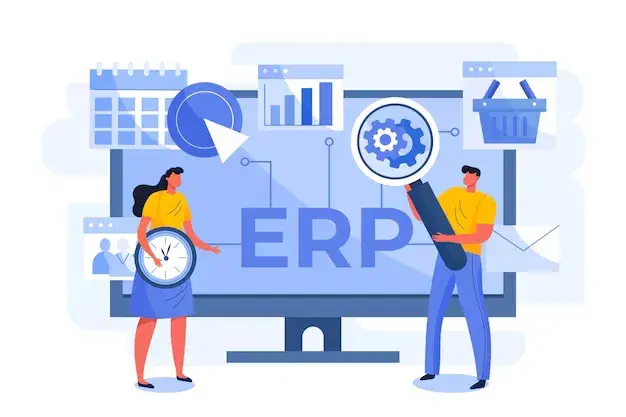
Enterprise Resource Planning (ERP) has evolved from being a back-office operational tool to becoming the backbone of modern retail and wholesale businesses. In an increasingly competitive and omnichannel-driven market, retailers-whether small, mid-sized, or large enterprises-must operate with agility, accuracy, and real-time visibility. This is where ERP systems play a transformative role.
For retailers and wholesalers managing multiple stores, warehouses, channels, and users, maintaining operational efficiency manually or through disconnected systems is no longer feasible. Enterprise Resource Planning systems bring together various business functions such as inventory, sales, finance, supply chain, and analytics under one unified platform.
The integration of Retail ERP Management Software in business operations equips retailers with the ability to manage complex workflows, reduce inefficiencies, and make informed decisions faster. Over the years, ERP solutions have also adapted to modern needs-offering cloud access, real-time analytics, automation, and integration with other business-critical systems like POS, GST compliance tools, and omnichannel platforms.
Today's ERP ecosystem goes beyond just managing resources-it empowers businesses to scale, adapt, and compete in a digital-first environment.
Here are some of the crucial business challenges that ERP systems can solve and how they contribute to making your business more efficient and effective.
1. Unified Platform: One System for Every Business Function
One of the most persistent challenges retailers face is working across fragmented systems - separate tools for inventory, billing, accounting, warehouse management, and customer data. This fragmentation leads to data duplication, reconciliation errors, operational delays, and poor decision-making.
Retail ERP software solves this with a single, unified platform.
Instead of switching between multiple tools, your teams access all critical business data - stock levels, purchase orders, sales figures, financial reports - from one centralized interface. Inventory updates from a warehouse reflect instantly in the billing system. Store-level sales data automatically updates financial records. Purchase orders flow seamlessly into accounts payable.
For Indian retailers, this unified approach also extends to GST compliance. A well-integrated retail ERP auto-calculates GST across transactions, generates e-invoices, and reconciles GSTR filings - eliminating the compliance burden that manual processes create.
The "single source of truth" also improves coordination across procurement, sales, finance, and store operations teams. Everyone works from the same data, which reduces inter-department miscommunication and speeds up decision cycles.
Key benefits of a unified retail ERP platform:
- Eliminates redundant data entry across departments
- Real-time stock visibility across all store locations and warehouses
- Automated GST calculations and e-invoice generation
- Seamless integration with POS, e-commerce platforms, and order management systems
- Accurate supplier management and purchase cycle tracking
The result: significantly lower operational complexity and more time for business owners and managers to focus on growth.
Looking to streamline inventory, billing, GST compliance, warehouse management, and multi-store retail operations?
2. Cloud-Based Access: Manage Your Business from Anywhere
Traditional on-premise software locked businesses into physical locations. For retail chains with multiple outlets, this meant business owners were often flying blind when away from their primary office or store.
Modern cloud-based retail ERP software eliminates this constraint entirely.
With a cloud ERP solution, business owners, store managers, and operations teams can securely access real-time business data from any internet-enabled device - whether from a head office, a store location, or while traveling. No VPNs, no delays, no stale data.
This capability is especially powerful for:
- Multi-store retail chains: monitoring daily sales performance across locations
- Wholesale distributors: tracking dispatch status and payment collections
- Franchise networks: maintaining consistency in pricing, promotions, and inventory policies
Remote access also dramatically accelerates decision-making. If a fast-moving product is running low at one store, the manager can immediately trigger a stock transfer from another location or place a replenishment order with the supplier - all from a mobile device.
Advantages of cloud ERP for retail:
- Automatic software updates - always compliant with the latest GST and e-invoicing regulations
- Role-based access control - each user sees only what they need to, protecting sensitive business data
- Scalability - add new stores, users, or warehouses without heavy IT investment
- Data encryption and regular backups - enterprise-grade security without enterprise-level IT teams
- Lower total cost of ownership vs. on-premise deployments
India's retail sector is growing rapidly, with Tier-2 and Tier-3 cities becoming the new growth frontier. Cloud ERP gives expanding retailers the infrastructure flexibility to scale operations without proportional increases in IT costs.

Connect stores, marketplaces, and D2C channels with an omnichannel retail solution that syncs inventory, pricing, and orders across every sales channel.
3. Process Automation: Save Time, Reduce Errors, Standardize Operations
Every hour your team spends on manual data entry, spreadsheet reconciliation, or chasing up purchase orders is an hour not spent on selling, customer service, or strategic planning.
ERP systems automate the repetitive, rule-based tasks that consume retail teams' time.
Within a well-implemented retail ERP:
- Purchase orders are auto-generated when stock falls below reorder levels
- Sales invoices are created and dispatched automatically
- GST entries are computed and recorded without manual intervention
- Inventory counts are updated in real time as goods move between locations
- Financial entries are posted automatically upon transaction completion
This automation does more than save time - it standardizes your operations. Every process follows a predefined workflow, which reduces dependency on individual expertise and makes it easier to onboard new staff, open new stores, or bring in franchise partners.
Process standardization also matters for compliance. Indian businesses face regular GST audits and increasing scrutiny on e-invoicing. An ERP that enforces consistent documentation and auto-generates compliant records significantly lowers your compliance risk.
For wholesale businesses managing large order volumes across multiple distributors or B2B customers, ERP automation in order processing, dispatch tracking, and accounts receivable collection is especially impactful - reducing order-to-delivery timelines and improving customer satisfaction.
Improve checkout efficiency, automate billing workflows, and gain real-time visibility across all retail stores using a powerful cloud POS platform.
4. Real-Time Analytics and Business Intelligence: Make Data-Driven Decisions
In today's retail environment, intuition is not enough. The retailers and wholesalers who win are those who can quickly interpret their data, spot trends, and act before their competitors do.
Retail ERP systems provide real-time analytics and business intelligence across every function of the business.
Decision-makers can access live dashboards showing:
- Daily, weekly, and monthly sales performance by store, product category, or sales channel
- Inventory aging reports identifying slow-moving and fast-moving SKUs
- Supplier performance metrics - lead times, fill rates, return rates
- Gross margin by product, category, or store
- Customer purchase frequency, basket size, and loyalty metrics
Demand forecasting is one of the most powerful analytics capabilities retail ERP systems offer. By analyzing historical sales data, seasonal patterns, and market trends, the ERP helps retailers predict future demand with precision - enabling smarter procurement decisions, reducing overstocking and stockouts, and improving working capital utilization.
For Indian retailers dealing with high SKU counts, seasonal demand spikes (festivals, sale seasons), and multi-location complexity, accurate forecasting is a meaningful competitive advantage.
Modern ERP platforms also integrate Business Intelligence (BI) tools that enable scenario planning, cohort analysis, and profitability modeling - capabilities previously available only to large enterprises, now accessible to mid-market retailers.
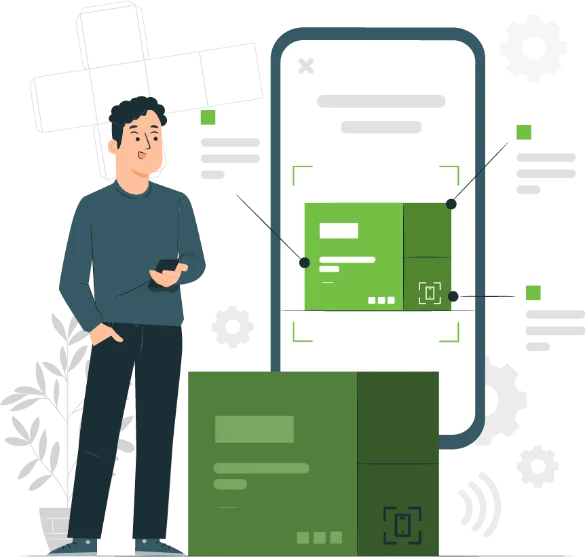
Reduce stock mismatches, optimize warehouse operations, and improve fulfillment accuracy with real-time inventory tracking and warehouse management tools.
5. Omnichannel Integration: Unify Online and Offline Retail Operations
Indian retail is no longer just brick-and-mortar. Today's successful retailer operates across physical stores, a brand website, e-commerce marketplaces (Flipkart, Amazon, Myntra), and quick-commerce platforms - all simultaneously.
Modern retail ERP software is built to be the operational hub of omnichannel retail.
A well-integrated retail ERP ensures:
- A single inventory pool that updates across all channels in real time - preventing overselling or underselling
- Centralized order management across offline POS, website orders, and marketplace orders
- Unified customer data - purchase history, loyalty points, and preferences - regardless of which channel the customer uses
- Consistent pricing and promotions across channels, managed from one system
For example, when a customer places an order online and opts for in-store pickup, the ERP manages inventory reservation, store notification, and fulfillment tracking automatically - delivering a seamless customer experience without manual coordination.
Emerging capabilities in modern retail ERP systems include:
- AI-powered demand forecasting and anomaly detection
- Automated replenishment triggers based on real-time stock signals
- Mobile-first warehouse management using handheld devices
- Loyalty program integration and customer segmentation
These capabilities ensure retail ERP systems remain relevant and powerful as the Indian retail landscape continues to evolve.

Integrate your retail business seamlessly with marketplaces, e-commerce platforms, payment gateways, logistics partners, and POS systems using Ginesys integrations.
Is Your Business Ready for a Retail ERP System?
Implementing a retail ERP system is one of the most impactful decisions a retailer or wholesaler can make. But success depends on choosing a solution that is purpose-built for your industry - not a generic enterprise tool that requires heavy customization.
When evaluating a retail ERP, look for:
- Native POS integration (cloud POS, desktop POS, mobile POS)
- Built-in GST compliance and e-invoicing support
- Omnichannel order management across D2C, marketplace, and offline channels
- Real-time multi-store inventory visibility
- Scalable architecture that grows with your business
- Proven implementation support and retail domain expertise
Ginesys is India's leading retail ERP platform, purpose-built for retailers, wholesalers, D2C brands, and franchise networks. With integrated POS, omnichannel order management, GST compliance, warehouse management, and real-time analytics, Ginesys One equips retail businesses to scale efficiently in a digital-first market.
Book a personalized demo to see how Ginesys helps retailers manage inventory, omnichannel operations, billing, and order fulfillment from one platform.
FAQs
1. What is retail ERP software and how is it different from regular ERP?
Retail ERP software is an ERP system specifically designed for the workflows of retail and wholesale businesses - including POS integration, inventory management across multiple stores, customer loyalty, omnichannel order management, and GST compliance. Unlike generic ERP systems, retail-specific ERP comes pre-configured for retail processes, reducing implementation time and customization costs.
2. How does ERP software improve retail business efficiency?
Retail ERP improves efficiency by automating routine tasks (invoicing, stock replenishment, GST entries), eliminating data silos, providing real-time inventory visibility across locations, and giving managers actionable analytics - all from a single platform. Businesses typically see significant reductions in manual errors and operational costs.
3. Is cloud-based retail ERP suitable for small and medium retailers in India?
Yes. Modern cloud ERP solutions like Ginesys are designed to scale - from single-store retailers to large multi-store chains. Cloud deployment means lower upfront infrastructure costs, automatic regulatory updates (GST, e-invoicing), and remote access - making it especially practical for growing Indian retail businesses.
4. Can ERP systems handle multi-store retail operations?
Yes. Multi-store management is one of the core strengths of retail ERP. The system provides centralized control over inventory, pricing, promotions, and staff access across all locations - with store-level reporting and head-office visibility.
5. Does retail ERP software support GST compliance in India?
Yes. Purpose-built retail ERP systems for India include built-in GST modules that auto-calculate tax, generate GST-compliant invoices, support e-invoicing (IRN generation), and facilitate GSTR reconciliation - keeping your business compliant with evolving Indian tax regulations.
6. How does retail ERP help with inventory management?
Retail ERP provides real-time tracking of stock across all stores and warehouses. It alerts managers to low-stock situations, automates purchase order generation, tracks goods-in-transit, manages batch and expiry dates (for applicable categories), and generates inventory aging reports to reduce dead stock.
7. Can retail ERP integrate with e-commerce platforms and marketplaces?
Yes. Modern retail ERP systems integrate with e-commerce platforms (Shopify, WooCommerce, Magento), marketplaces (Amazon, Flipkart, Myntra), and quick-commerce channels - enabling unified inventory and order management across all online and offline sales channels.
8. What role does ERP play in omnichannel retail?
ERP is the operational backbone of omnichannel retail. It synchronizes inventory, orders, pricing, and customer data across physical stores, websites, and marketplaces - ensuring consistent customer experience and preventing issues like overselling, stock mismatches, or pricing discrepancies across channels.
9. How long does it take to implement a retail ERP system?
Implementation timelines vary by business complexity and the number of stores/locations. For a mid-size retailer, a cloud-based retail ERP like Ginesys can typically be deployed within 4–12 weeks, including data migration, staff training, and POS integration. A phased rollout approach is recommended for large chains.
10. What is the ROI of implementing a retail ERP system?
ROI from retail ERP comes from multiple sources: reduced manual effort, lower inventory carrying costs (through better stock optimization), fewer stockouts (protecting revenue), GST compliance savings, and faster decision-making. Most mid-market retailers begin seeing measurable ROI within 6–12 months of implementation.