How To Know It is Time To Change Your Point Of Sales Solution

Published:
Last Updated:
The Point of Sale (POS) system is one of the most critical components of any retail business. It is far more than just a billing counter—it is the central nervous system that connects customers, inventory, employees, and management. Every transaction that happens at a retail store, warehouse outlet, or showroom passes through the POS, making it a direct influencer of customer experience, operational efficiency, and business growth.
Over the years, POS systems have evolved significantly. What was once a basic billing tool has now transformed into a sophisticated retail management platform capable of handling inventory, customer data, analytics, integrations, and omnichannel operations. In today's competitive and fast-paced retail environment, a POS solution is expected to do much more than simply print receipts.
A modern POS solution helps retailers:
- Deliver faster and smoother checkout experiences
- Maintain accurate inventory across locations
- Understand customer buying behavior
- Integrate seamlessly with ERP, accounting, loyalty, and eCommerce platforms
- Generate actionable business insights through analytics
However, many retailers continue to operate on outdated or inefficient POS systems, often unaware of how much it is costing them in terms of lost sales, unhappy customers, and missed growth opportunities. While such systems may still "work" on the surface, they silently create bottlenecks that slow down operations and limit scalability.
An inefficient POS solution does not just impact store-level activities—it affects the entire retail ecosystem. Delayed billing, incorrect stock updates, limited integrations, and unreliable reports eventually lead to poor decision-making and declining customer satisfaction.
So how does a retailer know when it is time to move on from their existing POS solution?
In this article, we highlight nine major warning signs that indicate it is high time for retailers to invest in a modern, scalable, and integrated POS solution—one that aligns with today's omnichannel retail needs and future growth plans.
1. Fewer or No Integration Options
One of the strongest indicators that your POS system is outdated is its inability to integrate with other business applications. In today's retail environment, no system can function in isolation. Retailers operate within a complex ecosystem that includes ERP systems, accounting software, loyalty platforms, eCommerce marketplaces, marketing tools, and logistics partners.
Why Integrations Matter More Than Ever
Modern retail is no longer limited to a single store or sales channel. Customers may browse online, purchase in-store, return items at a different location, or expect loyalty benefits across all touchpoints. For this to work seamlessly, the POS must act as a connected node within the larger retail technology stack.
A POS solution with limited or no integration capabilities creates data silos. Information entered in one system does not reflect in another, forcing staff to perform manual updates. This leads to:
- Duplicate data entry
- Higher chances of errors
- Delayed decision-making
- Poor customer experience
For example, if your POS cannot integrate with:
- Email or SMS marketing tools, you cannot send targeted promotions
- Loyalty platforms, you cannot reward repeat customers effectively
- ERP systems, financial and inventory data become inconsistent
- eCommerce platforms, omnichannel fulfillment becomes impossible
Impact on Customer Experience and Revenue
Customers today expect personalization. They want relevant offers, seamless returns, and recognition across channels. If your POS cannot support integrations with loyalty programs or CRM platforms, you lose the ability to understand and engage your customers meaningfully.
This directly impacts customer retention. Shoppers who feel unrecognized or inconvenienced are more likely to switch to competitors who offer smoother and more personalized experiences.
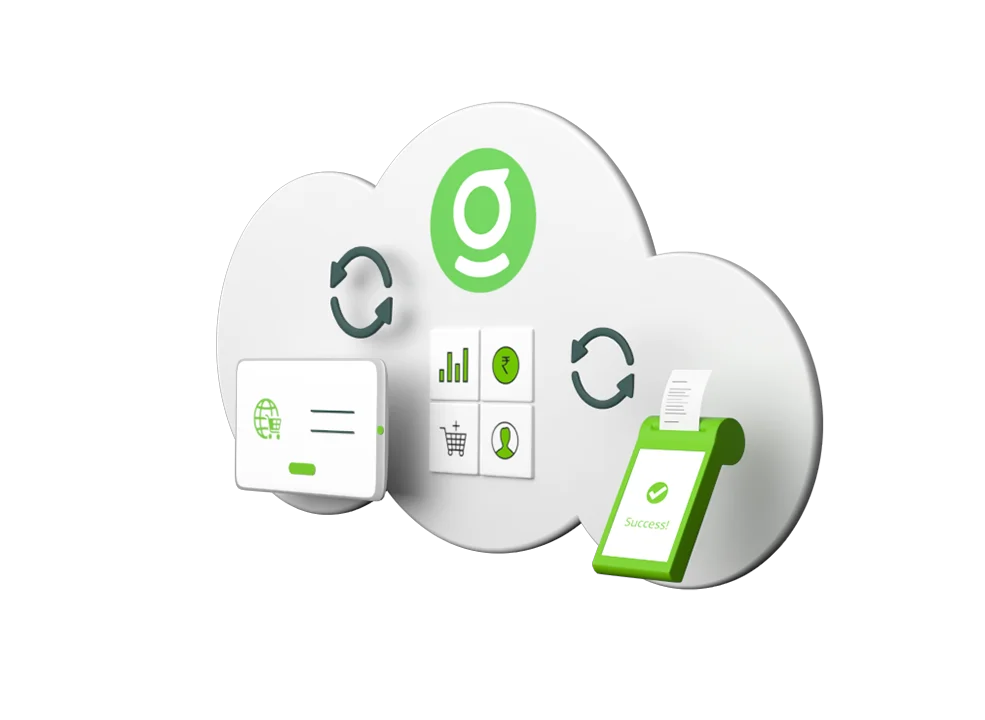
Stop struggling with disconnected systems. Explore our integrated Retail ERP solutions to unify your entire business ecosystem seamlessly.
The Modern POS Approach with Ginesys
A modern POS solution like Ginesys POS, part of the Ginesys One suite, is designed to work within an integrated retail ecosystem. While Ginesys does not offer a native loyalty program, it provides robust integration capabilities with third-party loyalty platforms, enabling retailers to implement personalized reward strategies without system limitations.
Ginesys POS also integrates seamlessly with:
- Ginesys ERP for centralized inventory and finance
- Browntape (Ginesys OMS) for omnichannel order management
- EaseMyGST for statutory GST compliance
- Ginesys BI & InsightX for advanced analytics
This integration-first approach ensures that retailers are not constrained by their POS but are empowered by it.
If your current POS does not support such integrations—or requires heavy customization to do so—it is a clear sign that an upgrade is overdue.
2. Poor Inventory Management
Inventory is the lifeblood of any retail business. Having the right product, at the right place, at the right time determines whether a sale happens or is lost. Your POS system plays a crucial role in ensuring inventory accuracy, as it is the point where stock movement begins.
The Importance of Real-Time Inventory Updates
Every transaction completed at the POS should immediately update inventory records. This real-time synchronization is essential for:
- Accurate stock availability
- Timely replenishment
- Avoiding overstocking or stockouts
- Supporting omnichannel fulfillment
When POS systems fail to update inventory in real time, retailers operate on outdated information. This can lead to scenarios where:
- Products appear available but are actually out of stock
- Excess inventory piles up due to inaccurate demand signals
- High-selling items are not replenished in time
These issues not only impact sales but also increase operational costs and customer dissatisfaction.

Tired of stockouts and manual reconciliations? Discover how Ginesys Inventory Management Software provides real-time visibility across all your stores and warehouses.
Challenges with Legacy POS Systems
Older POS solutions often handle inventory as a secondary feature rather than a core capability. They may update stock in batches instead of real time, or require manual synchronization with back-office systems. In multi-store or multi-warehouse setups, this creates chaos.
Retailers then resort to manual stock checks, spreadsheets, or periodic reconciliations—processes that are time-consuming, error-prone, and unsustainable at scale.
How Ginesys POS Strengthens Inventory Control
Ginesys POS is tightly integrated with Ginesys ERP, ensuring real-time inventory updates across stores, warehouses, and channels. Every sale, return, transfer, or adjustment reflects instantly in the system.
This enables retailers to:
- Monitor stock levels accurately
- Identify fast-moving and slow-moving items
- Place timely purchase orders
- Optimize inventory across locations
With Browntape (Ginesys OMS), retailers can extend this visibility to online channels, enabling features such as ship-from-store, click-and-collect, and centralized order fulfillment.
If your current POS struggles to keep inventory data accurate and timely, it is not just a system flaw—it is a business risk.
3. Inaccurate or Incomplete Analytics
Retail is a data-driven business. Every transaction generates valuable insights about customer behavior, product performance, pricing effectiveness, and operational efficiency. A POS system that cannot provide accurate and actionable analytics severely limits a retailer's ability to grow.
Why POS Analytics Are Critical
Analytics help retailers answer crucial questions such as:
- Which products generate the highest margins?
- Which stores or channels perform better?
- What promotions drive sales versus erode margins?
- How does customer behavior vary across regions or seasons?
Without reliable analytics, decision-making becomes reactive and based on intuition rather than evidence. This often results in ineffective strategies, wasted investments, and missed opportunities.

Turn your transaction data into actionable growth strategies. Check out our Business Intelligence & Analytics tools designed specifically for high-growth retail brands.
Limitations of Outdated POS Reporting
Many legacy POS systems offer basic reports that lack depth, flexibility, or accuracy. Data may be delayed, incomplete, or inconsistent with accounting records. Custom reporting may require manual effort or external tools, making analytics inaccessible to decision-makers.
In such environments, retailers struggle to:
- Measure ROI on promotions or technology investments
- Identify profitable versus loss-making categories
- Plan expansion or rationalization strategies
Advanced Analytics with Ginesys
With Ginesys POS, analytics are not an afterthought—they are built into the system. Transactional data flows seamlessly into Ginesys BI and InsightX, enabling advanced reporting and visualization.
Retailers gain access to:
- Sales and margin analysis
- Store and channel performance dashboards
- Inventory aging and turnover reports
- Customer purchasing trends
These insights empower business owners and managers to make informed decisions with confidence. When analytics are accurate and timely, strategy becomes proactive rather than corrective.
If your POS cannot support reliable analytics or limits your visibility into business performance, it is holding your growth back.
4. Limited Support for Omnichannel Retail
Retail today is no longer confined to a single sales channel. Customers may discover products on social media, check availability online, visit a physical store to try the product, and finally complete the purchase either online or in-store. A POS system that cannot support such omnichannel journeys becomes a major bottleneck for growth.
An outdated POS often works only at the store level and lacks the ability to synchronize data across channels such as eCommerce platforms, marketplaces, warehouses, and mobile sales applications. This results in fragmented operations where inventory, pricing, promotions, and customer data differ across channels. The outcome is confusion for both customers and staff, leading to missed sales opportunities and poor brand perception.
Modern POS solutions must integrate seamlessly with order management systems (OMS) and ERP platforms to enable capabilities such as buy-online-pick-up-in-store (BOPIS), ship-from-store, endless aisle, and cross-channel returns. Without this, retailers struggle to meet customer expectations that have been shaped by digital-first brands.
With Ginesys POS, when combined with Browntape (Ginesys OMS) and Ginesys ERP, retailers can unify offline and online operations. Inventory visibility, order routing, and fulfillment decisions happen in real time, enabling a true omnichannel retail experience. If your existing POS cannot support omnichannel workflows, it is a clear sign that it is time to upgrade.

Is your current POS holding back your expansion? See how our Cloud POS can scale your retail operations from a single store to a nationwide omnichannel presence.
5. Lack of Scalability as the Business Grows
Many retailers start with a POS system that suits their initial requirements—one store, limited SKUs, and a small team. However, as the business grows, the same POS often becomes restrictive. Expansion into multiple stores, warehouses, cities, or even wholesale channels exposes the limitations of systems that were never designed to scale.
A non-scalable POS struggles with:
- High transaction volumes during peak hours
- Multiple users accessing the system simultaneously
- Centralized control across locations
- Standardized pricing, promotions, and reporting
As a result, retailers experience slow system performance, frequent downtimes, and inconsistent data across outlets. These issues not only frustrate store staff but also negatively impact customer experience during billing and returns.
Scalability is not just about adding more stores—it is about supporting business complexity without compromising performance. Cloud-based POS solutions, such as those offered under the Ginesys One suite, are designed to scale effortlessly. Retailers can add new stores, users, or business units without reworking the entire system.
If your POS is slowing down your expansion plans or forcing you to manage different locations in silos, it is a strong indication that your business has outgrown the system.
6. Dependence on Manual Processes and Workarounds
One of the most overlooked signs that a POS system is outdated is the extent of manual intervention required to keep operations running. When store managers and staff rely heavily on spreadsheets, manual reconciliations, or offline records, it indicates gaps in system capability.
Manual processes increase the risk of:
- Human errors in billing and stock updates
- Delayed reporting and reconciliations
- Poor audit readiness
- Higher operational costs
In many cases, retailers accept these inefficiencies as "part of the business," unaware that modern POS solutions can automate most of these tasks. Automated workflows not only reduce errors but also free up staff time to focus on customer engagement and sales.
Ginesys POS, integrated with Ginesys ERP, automates inventory updates, pricing rules, taxation, and accounting entries. This minimizes dependency on manual workarounds and ensures consistency across operations. If your current POS requires frequent manual fixes to function correctly, it is time to consider a more robust alternative.
7. Difficulty in Managing Compliance and Taxation
Regulatory compliance has become increasingly complex for retailers, especially in regions with evolving tax structures and reporting requirements. A POS system that cannot adapt quickly to compliance changes exposes the business to financial and legal risks.
Older POS systems often require manual updates or custom development to accommodate changes in tax rules, invoicing formats, or statutory reporting. This not only increases dependency on vendors but also delays compliance readiness.
Modern retail POS systems must integrate seamlessly with taxation and compliance solutions to ensure accuracy and timeliness. With tools like EaseMyGST, integrated within the Ginesys One ecosystem, retailers can manage GST compliance efficiently without disrupting store operations.
If your POS struggles to keep up with compliance requirements or makes audits painful, upgrading to a cloud-enabled and compliance-ready system becomes essential.
8. Inadequate Support for Mobility and Modern Store Operations
Retail store operations have evolved beyond fixed billing counters. Today, mobility plays a crucial role in enhancing customer experience. Sales associates are expected to assist customers on the shop floor, check inventory instantly, and even complete transactions without forcing customers to queue at checkout counters.
Legacy POS systems are often tied to static hardware setups, limiting flexibility. They fail to support mobile POS (mPOS) devices that enable assisted selling and faster checkouts.
With solutions like Zwing POS, part of the Ginesys ecosystem, retailers can empower staff with mobile billing capabilities. This improves store efficiency, reduces wait times, and creates a more engaging shopping experience.
If your POS restricts you to traditional billing counters and does not support modern retail workflows, it is a sign that it is no longer aligned with current customer expectations.
9. High Cost of Maintenance and Upgrades
Another strong signal that it is time to change your POS solution is the rising cost of maintenance. Legacy systems often require:
- Dedicated on-premise infrastructure
- Frequent hardware replacements
- Manual upgrades and patches
- Vendor dependency for minor changes
These costs add up over time and offer diminishing returns. In contrast, cloud-based POS solutions follow a more predictable cost structure with regular updates, security patches, and feature enhancements included.
With Ginesys cloud solutions, retailers benefit from easier upgrades, reduced infrastructure dependency, and faster access to new capabilities. If maintaining your current POS feels more expensive than beneficial, transitioning to a cloud-ready solution is a logical next step.
The Role of Cloud POS in Easy Upgradation
One of the biggest concerns retailers have about changing POS systems is disruption—data migration, downtime, and training challenges. This is where cloud-based POS solutions make a significant difference.
Cloud-enabled POS systems like Ginesys POS on Cloud offer:
- Centralized data management
- Faster deployment and upgrades
- Automatic backups and security updates
- Easy scalability across locations
Cloud architecture ensures that retailers stay future-ready without frequent hardware replacements or complex upgrade cycles. New features, integrations, and compliance updates can be rolled out seamlessly, keeping the system aligned with evolving business needs.

Ready to upgrade to a future-ready retail platform? Book a personalized demo today and see how Ginesys can transform your store operations and customer experience.
Conclusion
Your POS system is not just a transactional tool, it is a strategic asset. If it lacks integrations, struggles with inventory accuracy, or fails to deliver meaningful analytics, it is no longer serving your business.
Recognizing the warning signs early and transitioning to a modern, cloud-enabled POS solution like Ginesys POS can help retailers improve efficiency, enhance customer experience, and scale confidently.
In today's retail landscape, the right POS solution is not a cost—it is an investment in sustainable growth.
FAQs
1. How often should retailers evaluate their POS system?
Retailers should review their POS capabilities at least once every 2–3 years or whenever they plan expansion.
2. Can a POS system support both retail and wholesale operations?
Yes. Solutions like Ginesys POS integrated with Ginesys ERP are designed for retail, wholesale, and hybrid models.
3. Is cloud POS secure for retail transactions?
Modern cloud POS systems use enterprise-grade security, encryption, and access controls to ensure data safety.
4. Does Ginesys POS support omnichannel retail?
Yes. With Browntape OMS and ERP integration, Ginesys supports seamless omnichannel operations.
5. How difficult is it to migrate from an old POS to Ginesys?
Ginesys provides structured migration support to ensure minimal disruption and secure data transfer.