Web POS Explained: Browser-Based Billing for Multi-Location Fashion Retail

Published:
Last Updated:
A customer walks into your Bengaluru store looking for a size M jacket. The store doesn't have it, but another branch does. The associate checks availability, reserves it, and completes the sale without making a phone call or opening a spreadsheet.
To the customer, it feels effortless.
Behind the scenes, that single transaction depends on inventory, pricing, promotions, customer data, ERP, and billing systems working together in real time.
As fashion retailers grow across multiple locations, keeping every store connected becomes far more challenging than opening the next store.
That's where Web POS changes how retail operations work.
Key Takeaway:
Web POS is browser-based billing software that store staff access through a web browser instead of installed desktop software, while still connecting to the same inventory, pricing, and ERP systems as the rest of the retail platform. For multi-store fashion retailers, that means centralized updates, faster store rollouts, and consistent pricing and promotions without maintaining software separately at every location.
What Is Web POS?
Web POS (Web Point of Sale) is billing and store management software that runs in a web browser instead of requiring locally installed software on each till. Web POS changes where the application runs, not how stores operate.
Instead of relying on locally installed software for day-to-day access, store teams use a browser to access the same billing environment. Scanning products, processing returns, redeeming loyalty points, and completing transactions remain familiar, while browser-based billing simplifies how the application is deployed and managed across multiple stores.
The real difference isn't how stores serve customers. It's how retailers maintain and scale their POS infrastructure. Because the application is centrally managed, software updates, operational configurations, and new store deployments can be managed more efficiently while helping every location operate from the same retail platform.
For growing fashion retailers, this makes it easier to maintain consistency across expanding store networks while reducing the operational effort involved in managing multiple locations.
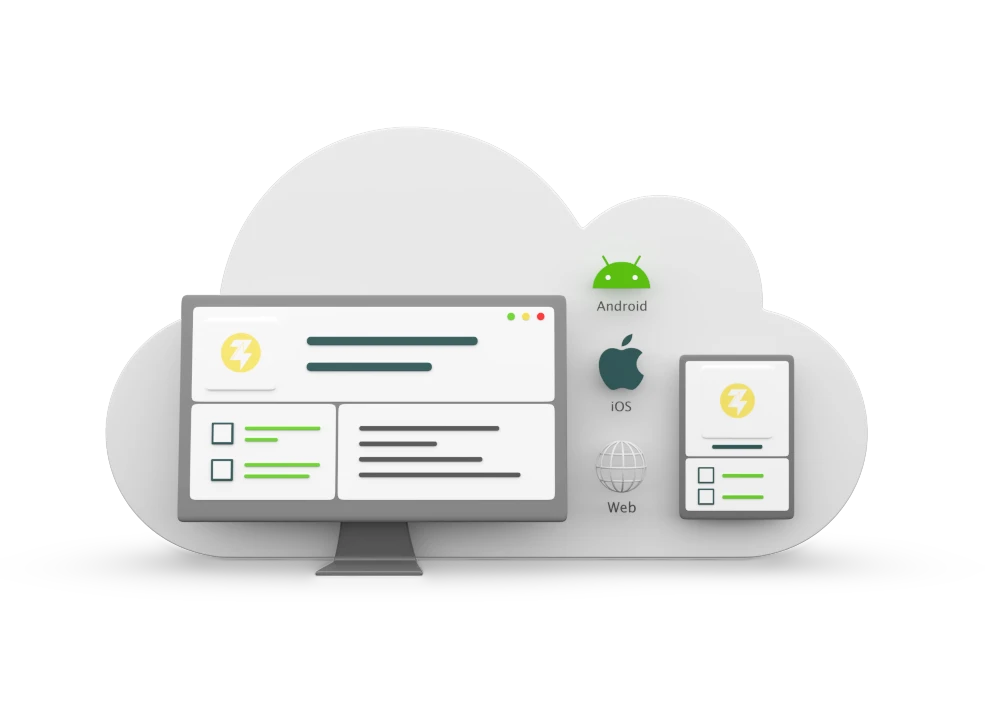
Connect billing, inventory, promotions, and customer transactions through Ginesys Cloud POS.
Why Browser-Based POS Matters for Fashion Retail
- Fashion retail is unlike most other retail sectors.
- Every product exists across multiple styles, colours, and sizes.
- Collections change several times each year.
- Promotions vary by season.
- Inventory moves continuously between warehouses, stores, marketplaces, and online channels.
- The billing counter sits at the centre of all these operations.
- Every transaction immediately affects inventory, customer history, promotions, and retail reporting.
- When stores operate independently, maintaining consistency across the network becomes increasingly difficult.
Browser-based POS helps retailers standardize those operations while keeping every location connected to the same retail platform.
The result is greater operational consistency rather than simply faster billing.
Browser-Based Doesn't Mean Limited Functionality
One common misconception is that Web POS is simply a billing screen running inside a browser.
In reality, it functions as part of a connected retail platform.
Behind every transaction, Web POS exchanges information with systems responsible for inventory, pricing, promotions, ERP, customer management, and omnichannel retail operations.
That means a sale completed at one store immediately contributes to inventory visibility, business reporting, and operational decision-making across the organisation.
For fashion retailers, this creates a connected retail environment where stores no longer operate as isolated locations but as part of one business.
Managing One Store Is Easy. Managing Fifty Is Different
As retailers grow, operational complexity rarely comes from billing itself. It comes from maintaining consistency across every store.
Every new location requires product masters, pricing, tax configurations, promotions, user permissions, and operational settings. Managing these individually across dozens or even hundreds of stores quickly becomes time-consuming.
Browser-based POS simplifies this through centralized application management, making it easier to roll out software updates, pricing changes, promotions, and operational configurations across the retail network.
Whether launching a festive collection or updating pricing across every location, the objective remains the same: every store should operate from the same information.
Faster Rollouts Without Changing Store Operations
Opening a new fashion store already involves coordinating inventory, merchandising, staffing, and marketing.
Technology shouldn't become another bottleneck.
Browser-based deployment simplifies onboarding new stores because the application is centrally managed rather than individually maintained at every location.
Importantly, this doesn't replace other deployment models.
Many retailers continue to use desktop POS in environments where it best suits their operational requirements, while others adopt browser-based deployment for greater flexibility across distributed store networks.
The right choice depends on the retailer's infrastructure, operational priorities, and expansion strategy.
What matters most is ensuring that every deployment model remains connected to the same retail platform.
Reliable Retail Doesn't Depend on Perfect Connectivity
Retailers often assume browser-based POS is slower than desktop software. In practice, overall performance depends on factors such as network quality, hardware, application design, and retail infrastructure. The objective isn't choosing the fastest deployment model. It's ensuring stores can bill customers quickly and reliably while remaining connected to the wider retail platform.
Every retailer eventually experiences network interruptions. The question isn't whether they happen, but whether they interrupt store operations.
For fashion retailers, even a few minutes of billing downtime during festive sales or weekend rushes can affect customer experience and store productivity. That's why business continuity matters just as much as billing speed.
Whether retailers choose browser-based or desktop deployment, the goal remains the same: stores should continue serving customers while maintaining inventory accuracy and synchronizing transactions with the wider retail platform whenever connectivity is available.
Ultimately, retailers should evaluate how well a POS platform supports uninterrupted operations, rather than focusing on the deployment model alone.
Billing Is Only One Part of the Retail Journey
A sale doesn't end at the billing counter. Every transaction immediately affects inventory, sales reporting, replenishment planning, and customer insights. When POS operates as a standalone system, those updates often need to be reconciled manually across multiple applications.
When POS software is connected to Retail ERP, inventory management, warehouse operations, and omnichannel commerce, every transaction becomes part of a connected retail operation. Inventory remains up to date, sales reporting reflects the latest activity, merchandising teams gain better visibility into sell-through, and operations teams can make faster, more informed decisions.
For fashion retailers managing thousands of style-colour-size combinations across multiple locations, the value lies not just in faster billing, but in ensuring every transaction contributes to a single, accurate view of the business.

Integrate POS with Retail ERP, inventory management, warehouse operations, and omnichannel retail through one connected platform.
Choosing the Right POS Deployment
Retailers often ask whether they should choose browser-based or desktop POS.
In practice, that's the wrong question.
The better question is whether the platform supports the way your business operates today while giving you flexibility as it grows.
Some retailers prefer browser-based deployment because of its centralized management. Others continue using desktop deployments that fit their existing store infrastructure. Many enterprise retailers use both.
What matters is that every deployment model remains connected to the same retail platform.
Looking Beyond Software Costs
The cost of a POS platform isn't limited to licensing.
Retailers should also consider how much time and effort goes into maintaining stores, deploying updates, onboarding new locations, and integrating retail systems.
As businesses grow, those operational costs often become more significant than the software itself.
A modern POS platform helps simplify store management, supports business expansion, and reduces the operational effort required to keep every location running consistently.
The better question isn't "Which POS costs less?"
It's "Which POS helps the business operate more efficiently over the next five years?"
The Future of Fashion Retail Is Connected Operations
Fashion retail is becoming increasingly connected.
Stores, warehouses, marketplaces, D2C websites, and customer engagement platforms all contribute to the same customer journey.
As that happens, the role of POS continues to evolve.
It is no longer just a billing application. It has become an operational touchpoint that connects inventory, customers, promotions, ERP, and omnichannel commerce.
Whether retailers choose browser-based or desktop deployment, the real advantage comes from ensuring every store operates as part of one connected retail ecosystem.
That is what enables retailers to scale with confidence.
How Ginesys Supports Modern Fashion Retail
As fashion retailers grow, billing becomes just one part of a much larger retail operation. The challenge is no longer processing transactions. It's keeping stores, inventory, warehouses, and digital channels connected as the business expands.
Ginesys addresses this through a connected retail platform that brings together Cloud POS, Desktop POS, Mobile POS, Retail ERP, inventory management, warehouse operations, OMS, promotions, and analytics. Rather than adopting disconnected systems, retailers can manage core retail operations through one integrated platform built for fashion and lifestyle businesses.
Retailers can choose the POS deployment model that best fits their operational requirements while keeping every store connected to the same retail platform. This helps maintain consistent pricing, inventory visibility, promotions, customer information, and operational processes across stores and digital channels.
Whether opening new stores, expanding into new cities, or growing omnichannel operations, Ginesys helps fashion and lifestyle retailers scale with connected retail infrastructure that simplifies operations today while supporting future growth.

See how Ginesys connects POS, Retail ERP, inventory, warehouse management, and omnichannel retail on one integrated platform.
FAQs
1. When should fashion retailers consider Web POS?
Fashion retailers typically consider Web POS when expanding across multiple stores and looking for a centrally managed deployment model. Browser-based access can simplify application management while keeping stores connected to the wider retail platform.
2. How does Web POS support multi-store fashion retail?
Web POS makes it easier to manage pricing updates, promotions, product information, and operational configurations across multiple stores, helping every location work from consistent retail data.
3. How does POS integration improve retail operations?
When POS is connected to Retail ERP, inventory management, warehouse operations, and omnichannel commerce, every transaction contributes to accurate inventory, business reporting, and operational decision-making across the business.
4. What should retailers evaluate when choosing a POS platform?
Retailers should evaluate deployment flexibility, integration with ERP and inventory, multi-store management, operational scalability, reporting capabilities, security, and how well the platform supports future business growth.
5. How should retailers choose between browser-based and desktop POS?
The choice depends on store infrastructure, deployment preferences, operational requirements, and long-term growth plans. Many retailers successfully use different deployment models while keeping every location connected through the same retail platform.
6. Why is a connected retail platform important for fashion retailers?
As retailers expand across stores, warehouses, marketplaces, and digital channels, connected retail platforms help unify inventory, billing, customer information, and business operations. This improves visibility, reduces manual effort, and supports long-term growth.
7. Is Web POS the same as Cloud POS?
Web POS refers specifically to the browser-based application store staff use for billing. Cloud POS is the broader category, it includes Web POS along with mobile POS (mPOS) options, all running on cloud infrastructure rather than local servers. Ginesys's Zwing platform offers both a web POS and an mPOS under the same cloud POS umbrella.