Wrong Item/Empty Box Claims: Evidence for Apparel Returns
Published:
Last Updated:
When a return becomes a dispute, can the brand prove what actually left its warehouse?
“The Package Left Your Warehouse Correct. But the Dispute Started Days Later.”
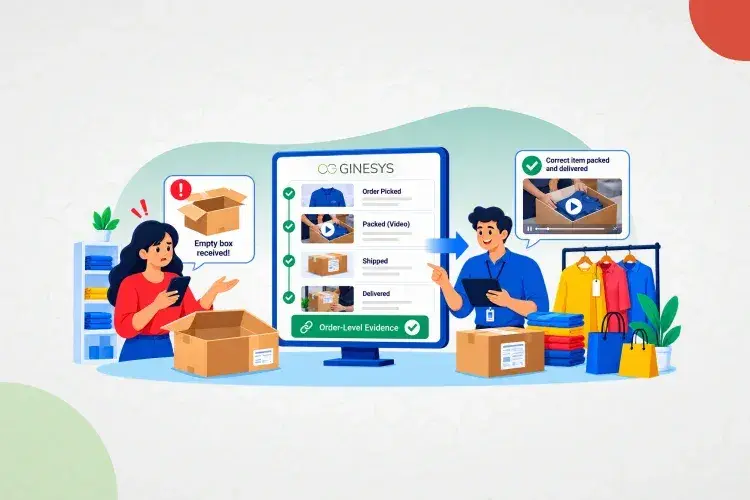
A brand dispatches 300 orders on a Friday. The following Wednesday, a marketplace dispute arrives: the customer says they received an empty box. The team is confident the order went out correctly. The warehouse packed it. The courier collected it. The tracking shows delivery.
Confidence doesn't close a dispute. Evidence does. And by Wednesday, the packing event is four days old, the courier has moved on to hundreds of other deliveries, and the brand is now trying to reconstruct what happened from a shipping label and an order record that proves nothing about what was actually inside the box.
This is the core problem with how most apparel brands think about returns and disputes. Evidence has to be built before the dispute arrives, not assembled after it does.
Key Takeaway
A shipping label only proves a parcel moved, not what was inside it, which is why apparel brands need order-linked evidence captured at packing, dispatch and return receipt to win wrong-item and empty-box marketplace claims before the dispute window closes.
Why Do Apparel Returns Create a Bigger Evidence Problem?
Apparel generates a category of return disputes that other product types rarely face at the same frequency.
Size and colour variants create a ready-made claim: “I received a size L, I ordered a size S.” This is plausible enough that marketplaces treat it as credible until proven otherwise. The brand may have dispatched the correct size. Without order-linked evidence showing which size was packed, there is no way to demonstrate that.
Wardrobing is harder to dispute because the product itself comes back. A customer buys a kurta for a wedding, wears it once, and returns it claiming it was defective. The item arrives back at the warehouse worn, with the tag reattached. The return looks legitimate in the system. The revenue is gone.
Product substitution is less common but more costly. A brand dispatches a ₹1,200 item. What comes back in the sealed box is a ₹200 item from another brand entirely. The marketplace shows a completed return. The refund is processed automatically. Without inspection evidence at the point of return receipt, the brand has no case.
Each of these scenarios shares the same underlying problem: the return event is treated as an administrative step rather than an evidence checkpoint.
The Real Weakness: Is the Shipping Label Enough Proof?
An order record shows what was supposed to be dispatched. A shipping label shows that something left the warehouse. Neither document proves what was inside the package at the moment it was sealed.
A traceable evidence trail for an apparel order needs to follow the product through every step it touches: Order, SKU, Pick, Pack, Parcel, Handover, Return, Inspection. At each of these points, something can go wrong, and at each of these points, documentation can either establish or leave a gap in the evidence record.
Most brands have documentation at the order and shipping label stages. Most have nothing at the pick, pack, parcel, or return inspection stages. That gap is where disputes live.
Why Building Proof at the Packing Table, Not After the Dispute, Is Important
The packing station is where the most actionable evidence can be created, and it is the stage most brands leave completely unrecorded.
When a picker scans an item's barcode, the system confirms the SKU against the order. That confirmation is a data record. When the item is packed and the parcel is sealed, an image or short video capturing the label, the product, and the sealed package creates a visual record tied to that Order ID at that timestamp.
This is not a complex workflow change. It adds seconds to each packing step. What it produces is an order-linked evidence record that can be retrieved by Order ID rather than reconstructed from camera footage days later.
For higher-value orders and products with a history of return disputes, video verification at packing adds a further layer. A 15-second clip showing the item, its label, its condition before packing, and the sealed parcel is specific enough to be meaningful in a marketplace claim submission.
Build the evidence trail before the dispute starts.

Connect order, fulfilment and return records so your team can trace the journey of an order without reconstructing it from disconnected systems.
Write the Warehouse SOP Around the Dispute, Not Just the Dispatch
Most warehouse SOPs are designed around getting the right item to the right customer quickly. They are not designed around proving that the right item reached the right customer when someone later claims otherwise.
A dispute-aware SOP covers the full chain: pick, verify against order, pack, capture evidence, seal, handover to courier, return receipt, return inspection. The evidence steps are not separate from the dispatch process. They are built into it so that every order generates its own documentation without requiring a separate effort.
For high-value or frequently disputed SKUs, the SOP should include risk-based verification: a secondary check before sealing, explicit capture of the item against the order label, and flagging for the returns team if that SKU comes back within a short window.
Use Technology to Turn “They Sent Back the Wrong Item” Into a Traceable Case
The operational records that could resolve most disputes already exist somewhere in a retail business. The problem is that they exist in separate systems that don't speak to each other at the order level.
An OMS holds the order and the customer's selection. A WMS holds the pick and pack activity. The courier integration holds the handover and tracking data. The returns system holds the inbound receipt. None of these systems, on their own, tell the full story of Order XYZ from dispatch to return. Connected, they do.
When marketplace order data, SKU and inventory records, warehouse scans, pick and pack activity, shipping information, return receipt, condition checks, and refund records all link to the same Order ID, the investigation that used to take two hours of staff time takes minutes. The evidence is already assembled. The brand's response to the marketplace is relevant records, not a written account of what someone remembers happening.

See how a connected OMS and WMS turn scattered records into one traceable order history.
A Simple 4-Layer Return-Dispute Evidence Framework
- Order evidence: Order ID, SKU, size, colour, variant, customer address, and order value confirmed at the point of dispatch.
- Fulfilment evidence: Barcode scans confirming the correct item was picked, pack-station images or video tied to the Order ID, sealed parcel photograph before handover.
- Transit evidence: Courier handover record, tracking data, proof of delivery timestamp and location.
- Return evidence: Return receipt scan, condition assessment at inbound, video or image capture of the returned item and packaging, comparison against dispatch records.
Each layer covers a different phase of the journey. A dispute that claims the wrong item was sent can be answered with fulfilment evidence. A claim that the package arrived empty can be answered with transit evidence alongside fulfilment evidence. A fraudulent return can be answered with return evidence compared against the original dispatch record.

Bring order, fulfilment, transit and return data together in one connected workflow.
Faster Evidence Means Faster Claims and Less Revenue Leakage
The time between a dispute arriving and evidence being submitted is where revenue gets lost. Marketplaces apply deadlines to claim submissions. Brands that miss those deadlines forfeit the claim regardless of whether their case was strong.
An evidence framework that makes claim resolution timeline fast, changes the claim resolution timeline completely. Instead of a two-day investigation that concludes the day before the deadline, the relevant records are available within an hour of the dispute arriving. The submission goes in the same day. The resolution comes faster.
KPIs worth tracking here are not just fraud metrics:
- Dispute rate by SKU identifies which products generate the most claims and whether the cause is product quality, size inconsistency, or return fraud.
- Evidence availability rate measures what percentage of disputed orders have fulfilment and return evidence on file.
- Claim resolution time tracks how quickly disputes close.
These are operational metrics. Brands that monitor them treat dispute management as a revenue protection function rather than an administrative task.
Build an Evidence Trail Into Every Order with Ginesys
Ginesys brings ecommerce order and inventory management together with ERP, POS and warehouse operations. Our Ecommerce OMS supports marketplace and webstore integrations, order processing, inventory synchronization, and fulfilment workflows, while Ginesys WMS supports barcode-based picking, packing, order tracking and shipping operations.
For apparel businesses managing orders across multiple channels, this connected setup can help maintain a clearer operational record across the order and fulfilment journey. Orders can be routed based on configured fulfilment rules, inventory can be reserved against online orders, and warehouse teams can use barcode scanning to reconfirm picked items against the relevant picklist before packing and shipment.
This gives operations teams a stronger foundation for tracing fulfilment activity when a wrong-item or other order-related dispute needs to be investigated. The evidence framework itself can then incorporate the appropriate packing, shipping, and return documentation required by the business and its marketplace partners.
For apparel brands looking to bring ecommerce orders, inventory and warehouse operations into a connected workflow, Ginesys provides the technology layer across these core retail processes.
Book a demo to explore Ginesys' ecommerce order management and warehouse capabilities.
Frequently Asked Questions (FAQs)
Why is a shipping label not enough proof for a marketplace wrong-item claim?
A shipping label confirms that a parcel was collected and delivered, not what was inside it. Marketplace dispute teams require evidence tied to the specific item packed: barcode scans, order-linked images or video, or condition records that demonstrate the correct SKU left the warehouse in the correct state.
What types of apparel return fraud are most common on Indian marketplaces?
Wrong-item claims, wardrobing where a worn product is returned as unused, and product substitution where a lower-value item is returned in place of the original are the most frequent patterns. All three are harder to dispute without return inspection evidence captured at the point of receipt rather than reconstructed afterward.
What should a warehouse SOP include to support return dispute evidence?
At minimum: barcode scanning at pick and pack, order-linked parcel images before handover, courier handover records, return receipt scanning, and a condition assessment with visual capture when the return arrives. Higher-value or frequently disputed SKUs should have a secondary verification step before sealing.
How does video evidence at return receipt help with marketplace claims?
When a returned item is scanned and the condition is captured on video across multiple views at the point of inbound receipt, the brand has a contemporaneous record of what actually came back. This is directly comparable to the original dispatch record and is the most straightforward way to contest a product substitution or wardrobing claim.
What KPIs should apparel brands track alongside their claim recovery rate?
Dispute rate by SKU identifies which products are generating recurring claims and whether the cause is product, sizing, or return behaviour. Evidence availability rate measures what percentage of disputed orders have order-linked proof on file. Claim resolution time tracks how quickly submissions are closing, which reflects both evidence quality and process efficiency.