Why Retail Billing Software Without Analytics Limits Business Growth
Published:
Last Updated:
At the end of a typical trading day, retail billing software confirms what most teams already know: how many transactions occurred and how much revenue was booked. Sales totals reconcile, reports close, and operations appear under control. Yet when decision-makers ask which categories are compressing margins, why conversion dipped despite steady footfall, or whether promotional sales are really profitable, the system offers no answers. The transactions are there but the insight is missing.
This is the core limitation of billing-only retail software. It captures outcomes without explaining the business dynamics behind them. It shows what sold, but not why it sold, who drove the demand, or what should change next. In retail environments, where margins are thin, inventory risk is high, and customer behaviour shifts quickly, this absence of intelligence is not benign.
For multi-store and omnichannel retailers, the gap between data capture and data understanding becomes a structural constraint. Without built-in analytics, billing software creates a surface-level sense of control while limiting decision speed, operational efficiency, and long-term profitability.

How Retail Billing Software Without Analytics Creates a False Sense of Control
The limits of billing-only software are rarely obvious at first. Transactions are recorded accurately. Daily sales figures are available. On the surface, the operation looks managed. What is missing is context.
Billing software confirms that a transaction occurred but provides no visibility into customer behaviour, product performance, or demand patterns behind it. A retailer reviewing daily sales figures sees numbers, not the story those numbers carry. Which SKUs are pulling repeat purchases? Which store is underperforming relative to its catchment area? Which promotions are moving margin rather than just volume?
Without analytics, these questions remain unanswered. Decisions default to gut instinct, experience, or guesswork, all of which become progressively less reliable as retail environments grow more competitive and customer behaviour more fragmented. Over time, this gap between what is recorded and what is understood becomes one of the most significant constraints on retail growth.

Stop running your retail operations on instinct. See what built-in analytics can surface for your business.
How the Lack of Real-Time Insights Leads to Missed Sales and Profit Opportunities
The absence of data-driven decision making has direct commercial consequences. Without real-time analytics, retailers cannot identify fast-moving products, stagnant inventory, or high-margin categories as conditions develop. That delay in recognition becomes a delay in action.
A product category spiking in demand on a Tuesday does not get replenished until the weekly review. A high-margin SKU sitting at three units across five stores does not trigger a transfer order because no one sees the pattern. A promotion running below target does not get adjusted because the underperformance is only visible in the end-of-month report.
Research confirms that real-time retail analytics materially improves decision speed across pricing, replenishment, and promotions, allowing retailers to respond to demand signals while they are still commercially relevant, rather than after reporting cycles close. The biggest loss from billing-only systems is not bad data. It is slow insight, and slow insight consistently becomes missed revenue.
Retail analytics takes care of this by surfacing demand signals, inventory risk, and margin opportunity in real time, and enabling replenishment decisions, markdown triggers, and promotional pivots while they still matter. Retailers operating without these insights consistently leave revenue on the table, not through bad decisions, but through delayed ones.
Why Retail Billing Software Without Analytics Fails at Demand Forecasting
Poor demand forecasting is one of the most expensive operational problems in retail. Billing-only systems record what was sold in the past, but they do not help predict what will be needed next. The historical transaction log exists, but the analytical capability to convert that log into forward-looking demand signals does not.
The scale of this problem is significant. Global retail losses from stockouts and overstocks reached $1.77 trillion in 2024, driven primarily by inaccurate demand forecasting and disconnected inventory data, according to IHL Group. Billing software without analytics does not just lack foresight. It actively contributes to this capital leakage by leaving inventory decisions disconnected from real demand signals.
Retailers relying on billing data alone cannot anticipate seasonal shifts, regional demand variation, or product lifecycle transitions. The result is a persistent inventory planning problem. Overstocking locks capital in slow-moving goods and increases markdown risk. Understocking means lost sales and customer frustration, both of which have downstream effects on retention and brand perception.
Analytics tools use historical and behavioural data to model demand at the SKU and location level, enabling stock allocation decisions grounded in actual signal rather than category intuition. Without this capability, inventory planning is reactive by design, and the costs accumulate quietly across every replenishment cycle.

Eliminate inventory blind spots with real-time demand intelligence built into your billing platform.
How Disconnected Systems and Data Silos Reduce Operational Efficiency
Billing software in most retail operations does not exist in isolation. It sits alongside inventory management tools, an ERP, a CRM, and increasingly a set of e-commerce and marketplace integrations. The problem is that these systems frequently do not talk to each other.
Disconnected systems and data silos mean that producing any cross-functional report requires manual extraction and consolidation. Finance pulls from one system. Operations pulls from another. MIS spends hours reconciling figures before any analysis begins. By the time the consolidated view is ready, some of it is already outdated.
This fragmentation slows decision-making at every level. It also increases the risk of errors and inconsistencies that erode trust in the numbers. When teams are not working from the same data, every meeting involves a version of the same reconciliation conversation. The cost is not just time. It is also the ability to respond to market changes before they become problems.
The Real Impact of Limited Insights on Customer Retention and Promotions
Without analytics, retailers cannot track customer purchase patterns, segment audiences, or identify lapsed buyers at the right moment. Promotions become generic broadcast events rather than targeted interventions, and their effectiveness reflects that.
The commercial difference is measurable. A Deloitte study found that retailers using analytics-led personalization achieve 16% higher conversion rates than those relying on basic or rules-based promotions. That gap is not a marketing advantage. It is a revenue gap that widens with every undifferentiated campaign a billing-only retailer runs.
A retailer running the same offer to its entire customer base is spending promotional budget on customers who would have purchased anyway, while missing customers who needed a trigger to return. Analytics enables segmentation by purchase frequency, category affinity, and recency, turning promotions into targeted investments rather than blanket discounts.
The same capability underpins cross-selling strategies and loyalty program design. When a retailer can see that a customer segment consistently buys from two specific categories but rarely from a third, that is a cross-sell opportunity with a measurable probability of conversion. Without that visibility, the opportunity does not exist as a decision. It exists only as unrealized revenue. The impact on customer retention and lifetime value is direct, and it compounds over time.
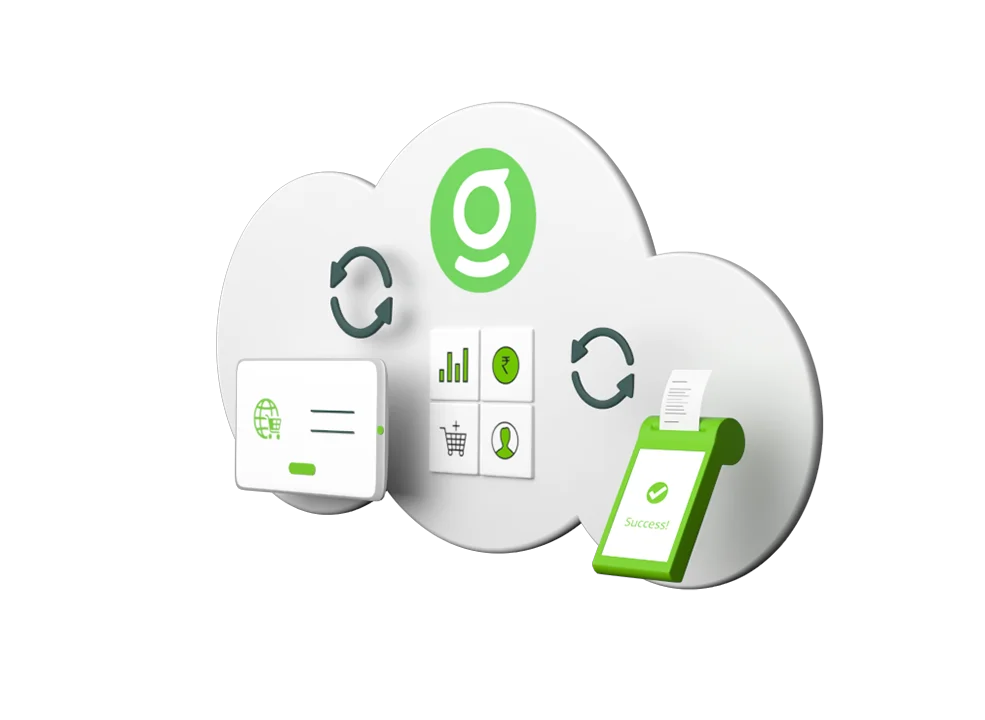
Unify your billing, inventory, and finance data into a single real-time layer built for retail decisions.
Inefficient Store Operations Stem from a Lack of Data-Driven Decision Making
Basic sales numbers tell a store manager how much was sold. They do not explain staff productivity patterns, peak hour distribution, conversion rates by department, or product-level profitability. Without analytics, these operational variables remain invisible.
A store with strong revenue but weak conversion rates may be understaffed during peak hours. A high-footfall location with declining basket sizes may have a merchandising problem concentrated in one category. These are solvable problems, but only if they are visible. Retailers without modern billing systems that include analytics dashboards are managing stores with a narrow instrument set.
Operational inefficiencies remain hidden not because they are hard to fix, but because they are never surfaced in a form that triggers action. Real-time store performance dashboards change that. When exceptions are visible as they happen, the gap between an identified problem and a corrective decision shrinks from weeks to hours.
How Integrated Analytics Transform Billing into a Strategic Growth Engine
When billing is connected to analytics, the nature of the transaction changes. It is no longer just a record of revenue. It becomes a data point in a continuous model of demand, customer behaviour, inventory performance, and operational efficiency.
Every sale contributes to a pattern that informs the next replenishment decision, the next promotional offer, the next staffing allocation. Retailers with integrated analytics can identify trends before they peak, optimize pricing against actual demand elasticity, and improve inventory turnover with precision that billing-only systems cannot support.
The commercial result is already visible at scale. According to KPMG's Global Tech Report, 54% of retailers report at least a 10% increase in profits directly attributable to analytics adoption. The same report notes that retail still lags other industries in analytics maturity, which means the upside for businesses currently running billing-first systems is substantial and largely unrealized. Competitors are already monetizing insight. Billing-only retailers are falling further behind with each reporting cycle.

Replace reactive store management with real-time operational intelligence across every location.
How Ginesys One Combines Retail Billing Software with Analytics
Ginesys One is a cloud-native retail management platform that brings POS billing, built-in analytics, ERP, and inventory management into a single, connected system, removing the data silos that limit insight and slow decision-making.
Every POS transaction across stores, warehouses, and online channels is captured in real time and fed into a centralized data layer. InsightX, Ginesys One's integrated analytics engine, converts this live transactional data into actionable dashboards covering sales trends, stock movement, category margins, store performance, and customer behaviour. Because billing and analytics operate on the same system, there is no manual reporting, reconciliation delay, or fragmented view of performance.
This integration turns billing from a passive record-keeping function into an active intelligence layer, enabling faster inventory decisions, more effective promotions, and data-driven control over profitability at every level of the retail operation.
Ginesys One creates a single source of truth for all retail operations. Finance, Operations, and MIS work from the same real-time data, reducing reconciliation friction and accelerating every decision cycle. Retailers can move from reactive operations, responding to problems after they surface in weekly reports, to proactive, insight-driven growth where exceptions are flagged automatically, demand signals inform replenishment before stockouts occur, and promotional decisions are grounded in actual customer behaviour.
The platform scales to support high transaction volumes during peak retail periods, so the analytics capability that drives growth decisions does not degrade precisely when the business needs it most.
Move beyond billing-only limitations. Book a demo to discover how Ginesys One unifies retail intelligence across every channel.
FAQs
1. Can billing software alone support multi-store retail operations at scale?
Billing-only software records transactions but lacks the analytical layer needed to manage inventory allocation, demand variability, and performance benchmarking across multiple locations. Without integrated analytics, scaling operations amplifies data silos rather than resolving them.
2. What specific metrics does integrated retail analytics surface that billing software cannot?
Integrated analytics provides SKU-level sell-through rates, footfall-to-conversion ratios, category margin contribution, and customer cohort behaviour, none of which are derivable from transaction logs alone.
3. How does poor demand forecasting directly affect working capital in retail?
Inaccurate forecasting leads to chronic overstocking in slow-moving categories and understocking in high-velocity ones, locking capital in unsellable inventory while creating lost-sale events that erode both revenue and customer satisfaction.
4. What is the operational risk of running disconnected billing and inventory systems?
Disconnected systems introduce reconciliation latency that delays replenishment decisions, increases the probability of data inconsistencies, and prevents operations teams from acting on demand signals before they translate into stockouts or overstock write-offs.