Retail POS Software in 2026: Moving Beyond Billing to Enable Intelligent, Data-Driven Store Operations
Published:
Last Updated:
The POS system has long been important to retail operations. In the organized expansion of Indian retail, the POS served primarily as a recording tool for sales and transaction closures. System recorded. Managers interpreted. Decisions were made days later, often based on outdated reports. India's organized retail is growing rapidly, with businesses operating in storefronts, marketplaces, and D2C channels. POSs that just record transactions cause friction at every layer at that size. Inventory decisions lag demand. Pricing varies by channel. Customers' data is disconnected. The retail crew uses yesterday's numbers.
The POS layer has a new role in 2026. Demand signals, customer behavior, inventory status, and channel activity interact in real time. Retailers using it as an operational control layer refill before stockouts, alter promotions based on live sell-through data, and recognize purchase history at checkout without looking up.
This blog will give you an insight into the retail POS software beyond billing to enable intelligent, data-driven store operations in 2026.

AI-Driven Forecasting Improves Inventory and Demand Prediction
Purchase history, supplier lead times, and buyer judgment still drive most retail inventory planning. This works for steady-state demand but breaks down during seasonal peaks, new product launches, and demand shifts that fall outside historical patterns.
The system flags replenishment needs before stockouts occur, and research on machine learning-powered forecasting suggests it can reduce demand errors by up to 50% and lower inventory carrying costs by around 10%, though results vary by category and implementation maturity.
Further than stock management, downstream impacts exist. Inventory replenishment automation aids procurement-supplier collaboration. Retailers stop over- and under-ordering for uncertainties and obsolete data. A major benefit of modern POS integration is data-driven stock decisions instead of reactive replenishment.

When store data flows across systems in real time, better decisions follow instantly.
Why Modern POS Systems Need Omnichannel Integration
Indian retailers scaling across physical stores, marketplaces, and D2C channels run into the same problem: each channel generates data the others cannot see. The POS holds in-store transactions. The marketplace holds online orders. The ERP holds procurement records. Without a connecting layer, these systems produce conflicting inventory numbers, inconsistent pricing, and customer records that reset at every touchpoint.
A unified commerce layer connecting POS, ERP, and order management resolves this at the operational level. Inventory visibility extends across warehouses, dark stores, and retail locations simultaneously, so stock availability stays accurate across Flipkart, Amazon, Myntra, and in-store channels from a single source. Order orchestration routes fulfillment to the nearest stocked location in real time without manual intervention. Promotions, price changes, and loyalty data update once and reflect everywhere, so the gaps that erode repeat purchase behavior stop forming in the first place.
Here is what breaks without it:
- Stock numbers do not match across locations.
- Orders fail during fulfillment
- Promotions do not sync between channels
Personalizing Engagement and Loyalty Transform POS Customer Engagement
Checkout has historically been the most underused customer touchpoint in retail. A transaction completes, a receipt prints, and the customer leaves with no record carried forward and no relevant engagement offered. Modern POS systems change this by making real-time purchase history, preferences, and loyalty status available within the checkout flow itself. A cashier can apply a targeted incentive, acknowledge a loyalty milestone, or surface a relevant offer based on what the customer actually buys, without stepping outside the billing screen.
This is not AI doing something exotic. It is rule-based logic, purchase data, and loyalty tier conditions working together at the point of interaction, with AI-enhanced personalization layered in where the platform supports it. Research indicates that data-driven personalization at checkout can lift conversion rates from around 3% to over 7%, a meaningful shift for stores processing hundreds of transactions daily. Loyalty features that track both in-store and online touchpoints compound this further, building customer experience consistency across every interaction rather than isolating engagement to a single channel.
Why Multi-Store Retail Operations Need Cloud Scalability and Store Automation
From three to fifteen stores shouldn't require POS infrastructure rebuilding. However, most traditional POS systems require that. New locations introduce new configurations, integrations, reporting setups, and data sync issues. Cloud scaling removes this limit. Users, features, and locations are introduced without system overhauls. All retailers' pricing, promotions, and configurations update instantaneously from a single source. Through a common cloud dashboard, operations personnel may see live, comparable data across all stores. Stock lying idle in one branch while another runs short is visible and actionable before margins suffer. Instead of store judgment, staffing, promotional timing, and replenishment can be handled centrally.
Store automation reduces billing, inventory changes, and reporting errors. Day-end reports are automated. Offline sync continues transactions when internet connectivity breaks and immediately reconciles data when it returns. Over 80% of organized merchants employ cloud-based POS with stock management, CRM, and sales analytics. Customer friction is reduced with integrated UPI, card, and digital payment flows for fast checkout.
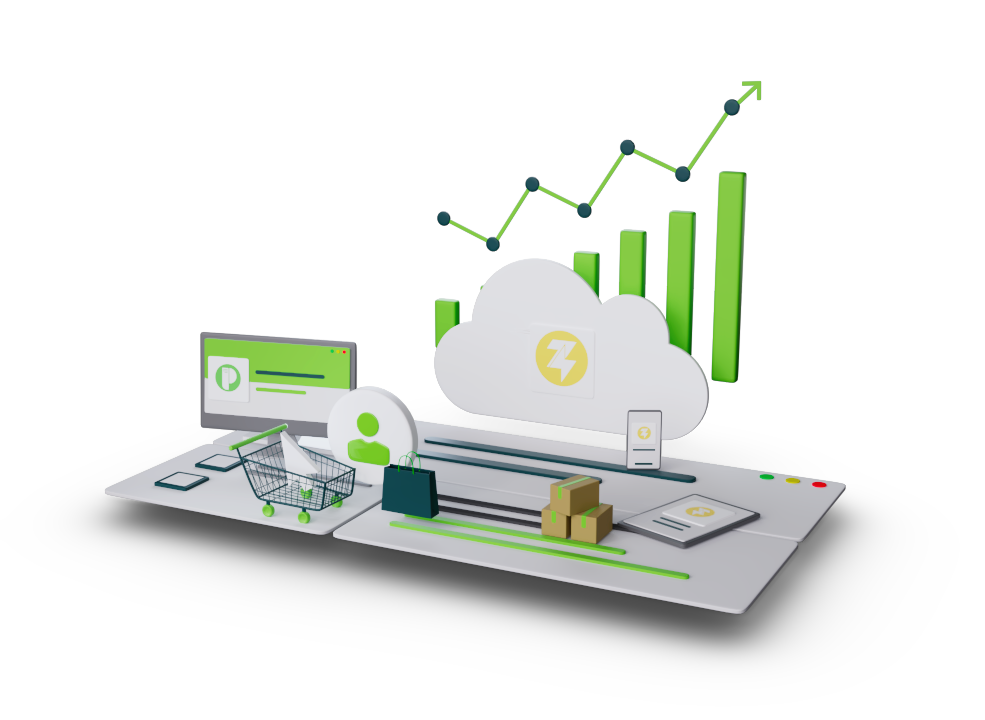
When inventory, pricing, and orders stay in sync, operations run without friction.
How POS-Driven Advanced Analytics Increases Profits and Efficiency
Retailers who generate and use data have different infrastructures. Most retail firms collected huge transaction data in 2026, and a few use it to make quick decisions. Sales, inventory, customer behavior, and profit data are merged into advanced POS analytics.
Pricing follows actual demand patterns, not category manager instinct. Promotions are tracked and adjusted in real time across all locations from a single control point, so discounts and markdowns stay consistent without store-level guesswork. ERP connectivity ensures POS data flows directly into procurement, finance, and warehouse management, keeping every function in sync without manual reconciliation or delayed reporting.
Specific digital boards give store managers and finance teams their own custom views. This setup keeps everyone on the same page. Different departments see live numbers instantly. Teams stop wasting time sending files back and forth. It makes the whole shop run much smoother.
POS Capability vs. Business Impact: What Changes When the System Works
| POS Capability | What It Enables | Business Impact |
|---|---|---|
| Real-time inventory sync | View stock levels across all stores and warehouses instantly. | You reduce lost sales and money does not get wasted on old stock. |
| AI-driven demand forecasting | Predict what you need so you can restock before items sell out. | Cut forecasting mistakes in half and spend 10% less on storage. |
| Embedded analytics dashboards | See helpful data right where you process your daily sales. | Staff can make faster choices and fix problems right away. |
| Omnichannel integration | Keep your prices and customer info the same online and in-store. | Customers get a smooth experience and every order arrives on time. |
| Loyalty and personalization | See what shoppers like and give them rewards at the register. | More people buy items, with sales rates rising from 3% to 7%. |
| ERP integration | Connect your sales data directly to your buying and finance teams. | Staff make 35% fewer mistakes and sell through items much faster. |
| Cloud scalability | Grow your business and add new features without changing hardware. | Manage many stores easily without stopping your daily work. |
| Offline sync | Keep ringing up sales even if your internet goes down. | Ensure transaction continuity |
| Access control and fraud alerts | Set staff permissions and spot unusual activity as it happens. | Lower your risk of theft and keep your records accurate. |
| Fast checkout | Handle payments, taxes, and rewards in one quick step. | Lines move faster and customers leave the store happy. |
What Will Shape POS Software in 2026 and Beyond
Retail systems are shifting fast. What felt new two years back now runs daily store work. A few clear moves stand out.
- AI Moves from Insight to Action: POS systems now use AI to plan stock, staffing, pricing, and promotion timing. This reduces manual effort and helps stores react early to demand changes, especially for brands running both online and offline.
- Checkout Leaves the Counter: Checkout is moving to mobile and contactless formats. Staff can complete billing anywhere on the floor, which removes queues and supports flexible store formats like kiosks and pop-ups.
- Stores Turn into Live Data Systems: POS platforms now connect with sensors, increasing integration with IoT and in-store analytics tools to create real-time store visibility. Shelves update stock automatically, and footfall data helps guide staffing and operations across the floor.
- Security Becomes Built In: As data grows, security and compliance come built into POS systems. Payment safety, GST automation, and fraud checks now run as standard, which reduces errors and keeps operations reliable.
- Composable Commerce and API-First POS Architecture: Monolithic POS platforms that lock every function are being abandoned by retailers. An API-first POS allows businesses to connect the best loyalty, payment, order management, and analytics tools separately, so they can update parts of their system without having to replace everything. This allows developing Indian shops to add BNPL interfaces, marketplace connectors, and regional payment methods at their own pace.
How GinesysOne Enables Intelligent and Data-Driven POS Operations
Ginesys One is built specifically for how Indian retail operates, not adapted from a generic global platform. The suite brings ERP, POS, order management, e-commerce, and GST compliance into one system, with ERP sitting at the core rather than bolted on as an afterthought. That ERP-first architecture is what separates it from standalone POS tools that handle billing well but hand off to disconnected systems for everything else. Ginesys One is used by over a thousand Indian retail brands to run operations with a unified view across stores, warehouses, and integrated marketplace channels.
For retailers moving toward data-led operations, that integration runs deeper than a surface-level sync. Inventory accuracy is maintained across physical stores, warehouses, and connected marketplace listings, ensuring stock positions remain aligned across fulfillment points. Store POS, browser-based interfaces, and mobile-enabled retail workflows connect directly with ERP and order management, which means pricing, promotions, and customer loyalty data stay consistent whether a sale happens in a Delhi flagship, a Tier 2 franchise outlet, or on Myntra. Teams operate with near real-time operational visibility via InsightX rather than relying solely on reconciled end-of-day reports.
When store operations feel disconnected, clarity starts with the right conversation.
Retail POS has moved far beyond billing. It now drives decisions, connects systems, and keeps stores ready for demand shifts. Data, AI, and integration turn everyday transactions into clear direction. This keeps operations steady and reduces missed opportunities. Retail growth now depends on how well systems think, not just how fast they bill.
Frequently Asked Questions
What is the difference between a traditional POS and an intelligent POS system?
Honestly, a traditional pos records transactions and prints receipts. An intelligent POS connects sales data, inventory, customer behavior, and store performance into a live operational layer that supports real-time decisions, AI-driven forecasting, and omnichannel integration.
How does real-time POS data improve store operations?
Store managers see exactly what stays on shelves and what sells fast right now. Real-time stats help people fix staffing or stock issues immediately. Waiting for reports at night is a thing of the past.
Why connecting ERP to the register matters
Sales info and warehouse levels move automatically into the main office computer. This setup stops workers from typing the same numbers twice. Everyone looks at identical facts across the whole company.
How does smart tech help at the checkout?
Modern programs look at old trends to guess what shoppers might buy next. These systems handle reordering goods and spot weird transactions that look like theft. Clever software even suggests deals based on local habits.
How does selling everywhere help shops?
Websites and physical stores stay synced so nobody buys an item that isn't there. Keeping prices the same across every app and counter builds trust. Smooth operations keep customers happy while preventing messy mistakes.