Signs that your Retail Business requires a new POS Software

Published:
Last Updated:
In today's retail environment, POS systems play a major role in the success of businesses, both large and small. What was once a simple billing system has now evolved into a central operational hub that connects sales, inventory, customer data, and business analytics into one unified workflow. Retailers today are operating in an ecosystem that demands speed, accuracy, personalization, and seamless omnichannel experiences and the POS system sits right at the heart of it all.
Even though the importance of POS systems is clear, it is still a sensitive topic for many small and mid-sized business owners. The primary concern often revolves around the perceived high investment required at the time of implementing a new POS system. This includes not only the software cost but also hardware, training, and process adjustments. However, what many retailers fail to realize is that continuing with an outdated POS system can lead to significant revenue loss, inefficiencies, and missed growth opportunities.
An outdated POS system can silently impact various aspects of the business from inaccurate inventory tracking and slow billing processes to poor customer experience and lack of actionable insights. In contrast, modern POS systems are designed to streamline operations, improve decision-making, and enhance customer engagement.
The main highlight of POS systems is that they tend to pay for themselves within a few years of implementation. By improving efficiency, reducing errors, optimizing inventory, and increasing sales through better insights, a good POS system becomes a long-term investment rather than a cost.
It is therefore crucial for retailers to identify whether their current POS system is holding them back. Recognizing the signs early can help businesses transition to a more advanced solution and unlock their true potential.
Sign 1: Lack of Visibility into High-Margin Product Sales
A lack of sales visibility for high-margin products indicates your POS software cannot track SKU-level data or deliver itemized breakdown analytics. When a system only records total revenue, retailers lose the ability to identify and promote their most profitable items.
In a modern retail environment, simply knowing total sales is not enough. Retailers need granular insights into which products are generating the highest margins, which categories are performing well, and which items are underperforming.
Without this level of visibility, businesses may miss opportunities to promote high-margin products effectively. For instance, placing these products in high-traffic areas of the store, bundling them with other items, or offering targeted promotions can significantly boost profitability.
Effective POS systems provide real-time sales tracking and detailed reporting capabilities. Retailers can analyze daily, weekly, and monthly sales data to identify trends and patterns. This allows them to make informed decisions about pricing, merchandising, and inventory planning.
Modern systems also integrate with analytics platforms, enabling advanced insights such as:
- Product profitability analysis
- Seasonal demand trends
- Customer purchase behavior
- Store-wise performance comparisons
In today's data-driven retail landscape, the inability to access such insights is a clear indication that your POS system needs an upgrade.
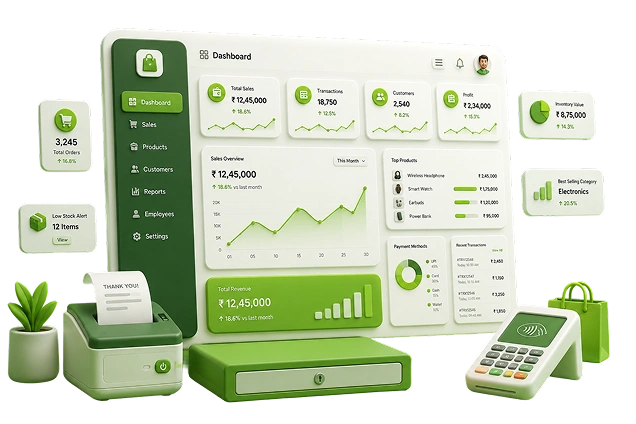
Upgrade your store billing experience to capture granular, margin-level transaction insights automatically.
Sign 2: Inefficient Inventory Management
Inefficient inventory management signals it is time to upgrade your POS when the software fails to update stock counts in real time across channels. This operational blind spot results in frequent in-store stockouts, excessive overstocking costs, and disconnected warehouse ledgers.
Customers today have very little patience for stores that do not have their desired products in stock. Frequent stockouts not only result in lost sales but also damage customer trust and loyalty.
On the other hand, overstocking ties up working capital and increases storage costs. Without proper inventory visibility, retailers struggle to maintain the right balance.
Effective POS systems provide real-time inventory updates, ensuring that stock levels are always accurate. They also offer features such as:
- Low-stock alerts and automatic replenishment suggestions
- Batch and SKU-level tracking
- Multi-store inventory visibility
- Stock transfer management between locations
In modern retail ecosystems, POS systems are often integrated with ERP and order management systems, enabling seamless inventory synchronization across online and offline channels.
For example, if a product is sold in-store, the inventory is instantly updated across all channels, preventing overselling. Similarly, retailers can fulfill online orders from store inventory, improving efficiency and customer satisfaction.
If your current POS system cannot provide accurate, real-time inventory insights, it is a strong sign that it is no longer sufficient for your business needs.
Sign 3: Weak Customer Engagement and Loyalty Management
The primary symptoms of weak loyalty management include an inability to securely log customer transaction histories, create personalized profiles, or issue points cross-channel. Outdated POS software restricts your team to generic billing, preventing the delivery of tailored promotions.
Modern customers expect personalized experiences. They appreciate retailers who understand their preferences, offer relevant promotions, and reward their loyalty.
Effective POS software helps save time and effort by capturing customer data at every transaction. It tracks purchase history, preferences, and frequency of visits, enabling retailers to build detailed customer profiles.
With this data, retailers can:
- Launch targeted marketing campaigns
- Offer personalized discounts and promotions
- Implement loyalty programs and reward systems
- Send automated communication such as SMS or email offers
This level of engagement not only increases repeat business but also turns customers into brand advocates.
In today's omnichannel environment, customer data must be unified across all touchpoints stores, websites, and mobile apps. Integrated systems ensure that customer interactions are consistent, regardless of the channel.
If your POS system does not support customer data management or loyalty programs, it is a clear indication that it is outdated.

Synchronize your multi-store inventories and backend procurement data on a unified dashboard.
Sign 4: Lack of Integration with Modern Retail Systems
A modern POS must integrate with your retail tech stack to eliminate manual spreadsheet reconciliation and prevent disconnected data silos. Native integration guarantees that storefront transactions instantly update accounting, tax compliance, CRM, and order fulfillment systems. Retail operations are no longer limited to billing and inventory they involve multiple interconnected systems such as CRM, ERP, accounting, order management, and analytics platforms.
An outdated POS system that operates in isolation creates data silos, leading to inefficiencies and errors. For example, sales data may not sync with accounting systems, or inventory updates may not reflect in online channels.
Modern POS systems are designed to integrate seamlessly with other business applications. This integration simplifies operations and ensures that all departments have access to consistent and accurate data.
Key integrations to look for include:
- ERP systems for financial and operational management
- Order management systems for omnichannel fulfillment
- GST and compliance tools for taxation
- CRM systems for customer engagement
- Analytics platforms for business insights
In today's retail ecosystem, platforms like Ginesys One bring together POS, ERP, order management, and analytics into a unified system. This eliminates the need for multiple disconnected tools and provides a single source of truth for the business.
If your POS system cannot integrate with other essential tools, it is likely limiting your business efficiency and scalability.
Sign 5: Inability to Leverage Customer and Sales Data
A legacy POS restricts data utilization by locking away raw transaction files without any internal visualization or predictive business intelligence metrics. Without robust analytical filtering, managers are forced to rely on manual guesswork rather than factual data to forecast consumer demand.
Customer data plays a very vital role in modern retail operations. It is essential for forecasting demand, optimizing inventory, planning marketing campaigns, and improving overall business performance.
An outdated POS system may store basic transaction data but lacks the ability to analyze it effectively. Without proper analytics, retailers are forced to rely on guesswork rather than data-driven decision-making.
Modern POS systems are equipped with advanced analytics capabilities or integrate with business intelligence platforms. These tools transform raw data into actionable insights.
Retailers can use these insights to:
- Forecast demand and plan inventory
- Identify peak shopping hours and optimize staffing
- Analyze customer behavior and preferences
- Measure the effectiveness of promotions
- Improve store layout and product placement
Advanced analytics platforms like InsightX further enhance these capabilities by providing real-time dashboards, automated reporting, and predictive insights.
With such tools, retailers can move from reactive decision-making to proactive strategy planning.
If your POS system cannot provide meaningful insights or support data-driven decisions, it is a clear sign that it needs to be replaced.

Connect your retail storefronts to e-commerce marketplaces and digital apps fluidly.
Additional Signs in Today's Retail Environment
The emerging bottlenecks of an outdated POS include severe checkout counter congestion, a lack of modern payment alternatives, and a complete absence of mobility features.
While the original indicators remain relevant, the modern retail landscape introduces additional signs that your POS system may be outdated:
1. Slow Billing and Poor User Experience
Long checkout times and complicated interfaces can frustrate both customers and staff. Modern POS systems are designed for speed and ease of use.
2. Limited Payment Options
Customers today expect multiple payment methods, including UPI, wallets, and contactless payments. Lack of support for these options can result in lost sales.
3. No Omnichannel Capability
If your POS system cannot support online orders, click-and-collect, or unified returns, it is not aligned with current retail trends.
4. Lack of Mobility
Mobile POS systems allow staff to assist customers anywhere in the store, improving service efficiency.
5. Poor Scalability
If your system struggles to handle additional stores, users, or transactions, it may hinder business growth.
Conclusion
To optimize customer experience and fully capitalize on the omnichannel consumer, retailers need to ensure that technology does not hold them back. An outdated POS system can limit growth, reduce efficiency, and negatively impact customer satisfaction.
Modern retail requires systems that are fast, integrated, data-driven, and scalable. Retailers must regularly evaluate their technology stack and upgrade when necessary to stay competitive.
Integrated retail solutions enable businesses to manage everything from billing and inventory to customer engagement and analytics within a unified ecosystem. This not only simplifies operations but also empowers employees to focus on delivering better customer experiences.
When employees have access to real-time information about products, inventory, and customer preferences, they can engage more effectively with customers and provide personalized service.
Ultimately, investing in the right POS system is not just about improving operations it is about unlocking the full potential of your retail business.

Discover how an integrated retail platform can transform your billing, stock, and growth.
FAQs
1. How do I know if my retail POS system is outdated?
Your retail POS system is outdated if it lacks real-time multi-store inventory synchronization, does not offer built-in customer analytics, fails to integrate with backend ERP or accounting systems, and cannot process modern mobile payments like UPI.
2. What are the operational risks of using a legacy POS software?
The biggest operational risks include revenue loss due to checkout delays, inaccurate inventory levels leading to stockouts, fragmented customer profiles, accounting discrepancies, and an inability to scale to multiple store branches.
3. How does upgrading to a modern cloud POS improve business sales?
A modern cloud POS improves sales by providing predictive analytics on high-margin products, shortening checkout queues, supporting automated loyalty rewards, and enabling omnichannel models like click-and-collect.
4. Can an advanced retail POS system support omnichannel retail operations?
Yes, modern retail POS systems act as a unified data source, integrating directly with e-commerce platforms, digital marketplaces, and order management tools to synchronize pricing, stock, and fulfillments across all channels.
5. What role do business intelligence and analytics play in POS software?
Analytics tools convert raw checkout logs into visual data tracking metrics. This allows retailers to monitor real-time product profit margins, forecast seasonal demand patterns, and track employee transaction speeds.
6. Is upgrading your storefront retail software worth the initial implementation cost?
Yes, upgrading your retail software is highly profitable over time. It minimizes manual administrative accounting labor, slashes checkout transaction errors, reduces storage costs through smart inventory tracking, and maximizes customer retention.