Top Retail and POS Trends Shaping Small and Medium Retail Businesses

Published:
Last Updated:
Retail doesn't wait. Every year the gap between "keeping up" and "falling behind" gets narrower, and small and medium retailers feel that pressure the most. A large chain can absorb a slow quarter, run losses on a new format while it finds its feet, or throw a bigger marketing budget at a problem. SMBs don't have that cushion. One bad festive season, one badly managed stock-out, one clunky checkout experience - and the customer just goes to the retailer next door, or worse, to an app.
Here's the good news: the technology that once separated enterprise retailers from everyone else - AI-driven forecasting, unified commerce, real-time inventory, cloud POS - is now affordable, accessible, and often just a subscription away. None of it requires a dedicated IT team or a six-figure implementation anymore. The retailers who win in 2026 won't necessarily be the biggest. They'll be the ones who use the right tools at the right time, and who stop treating technology as a back-office expense and start treating it as the thing that actually runs the business.
Below is a practical, no-fluff breakdown of the retail and POS trends shaping small and medium retail businesses this year - what's changing, why it matters, and what to actually do about each one.
Key Takeaway:
The technology gap between large retail chains and small and medium retailers has narrowed to a subscription, and the SMB retailers pulling ahead in 2026 are the ones replacing disconnected tools with one connected system for inventory, POS, orders, and customer data, not the ones with the biggest budgets.
1. AI Is Now a Day-to-Day Retail Tool, Not a Buzzword
AI in retail used to mean a chatbot bolted onto a website, mostly for show. Now it means demand forecasting that catches a stock-out before it happens, pricing engines that flag margin leaks in real time, and recommendation systems that quietly lift average order value without anyone in the store noticing the machinery behind it.
Where AI earns its keep for SMB retailers:
- Demand forecasting - predicts seasonal spikes, festive demand, and slow periods using historical sales and buying patterns, not gut feel or last year's spreadsheet
- Personalized recommendations - nudges customers toward products they're actually likely to buy, based on browsing and purchase history rather than generic "customers also bought" logic
- Anomaly detection - flags unusual sales patterns that often point to fraud, pricing errors, or operational issues before they become expensive
- Customer service automation - handles order tracking, stock queries, and FAQs so staff can focus their time on complex, high-value conversations
The shift that matters most isn't the technology itself - it's the move from descriptive analytics ("what happened last month") to predictive analytics ("what's likely to happen next month, and what should we do about it now"). That's the difference between reacting to a stock-out three days too late and preventing it altogether. For a retailer running lean on working capital, that difference shows up directly on the bottom line.
None of this requires a data science team. Most modern retail ERP and POS platforms now bundle basic AI forecasting and recommendation features directly into the product, which means the barrier to entry has dropped from "hire specialists" to "turn on the feature."
2. Omnichannel Isn't a Strategy Anymore - It's the Baseline
A customer discovers a product on Instagram, checks the price on a website, walks into the store to try it on, buys it through the app that evening, and picks it up in-store the next day. If any part of that journey breaks - a wrong stock count online, a price that doesn't match in-store, a return process that only works for purchases made in person - the customer notices immediately, and they don't give retailers much grace for it.
Omnichannel used to be a differentiator, something retailers could market as a premium experience. Today it's simply what "being open for business" means. The retailers still treating their store and their website as two separate operations, run on two separate systems with two separate stock counts, are the ones quietly losing sales to fragmented inventory and inconsistent pricing - often without realizing why conversion is dropping.
What proper omnichannel actually requires:
- Real-time inventory synced across every store, warehouse, and online channel, so "in stock" online actually means in stock
- One customer profile, regardless of where they shop, so loyalty points and purchase history follow the person, not the channel
- Order fulfillment that can route from the nearest or most efficient location, cutting delivery time and cost
- Returns and exchanges that work the same way no matter where the original purchase happened
This isn't a nice-to-have anymore for a growing SMB. It's the operational baseline customers assume exists, and a broken version of it is often more damaging than not having an online presence at all.
3. Unified Commerce Replaces "Integrated" Systems
There's a meaningful difference between integrated systems and unified systems, and it's worth understanding before investing in either, because the two are often marketed as if they're the same thing.
Integration means separate systems - a store POS, an e-commerce platform, a warehouse management tool - talk to each other through connectors and scheduled sync jobs. It works, mostly, but it's fragile. A sync failure means stale inventory data on the website, duplicate customer records across systems, or mismatched pricing between a store and an app. These failures are usually invisible until a customer hits one and complains.
Unified commerce means there's one platform, one database, one source of truth. Sales, inventory, customer data, and financials all live in the same system in real time, not synced across systems every few hours.
For growing SMB retailers, unified commerce isn't a luxury - it's what prevents the operational chaos that comes with adding a second store, a marketplace channel, or a new sales format. Every new channel added to an integrated setup multiplies the number of things that can go out of sync. A unified setup, by contrast, scales without multiplying complexity: adding a new store or channel means plugging into the same system, not stitching together another connector.
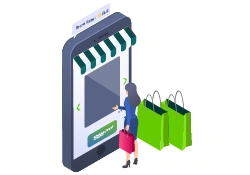
See what one connected system for inventory, POS, and orders looks like for your business.
4. Cloud POS Has Become the Default, Not the Upgrade
If your POS system still requires a server room, scheduled downtime for updates, and a technician on call whenever something breaks, that setup is quietly costing more than it looks like on paper - in downtime, in delayed decisions, and in the opportunity cost of not having real-time visibility.
Cloud POS gives SMB retailers:
- Remote access to sales, inventory, and staff performance from any device, from anywhere - useful for an owner managing multiple locations without being physically present at each one
- Automatic updates and security patches - no manual intervention, no scheduled downtime, no outdated software running critical operations
- Easy scaling: add a store, a user, or a new module without new hardware or a fresh installation
- Built-in backup and disaster recovery, so a hardware failure or power outage doesn't mean lost sales data
The businesses still running legacy, on-premise billing software aren't just missing convenience - they're missing the real-time visibility that makes fast decisions possible. When a stock discrepancy takes a day to surface instead of a few seconds, that's a day of lost selling opportunity or wasted purchasing spend.
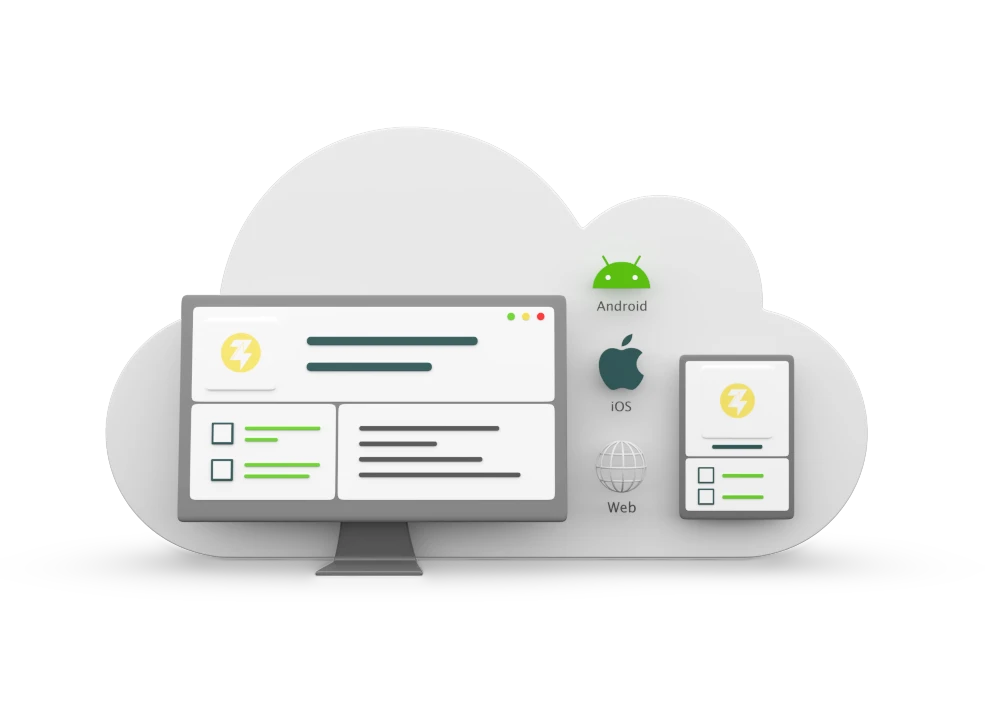
Move off the server room. See Zwing, Ginesys' cloud POS, in action.
5. Mobile POS Is Killing the Billing Queue
Nothing loses a sale faster than a long line at checkout during a festive rush or a weekend crowd.
Mobile POS - a tablet or phone that turns any staff member into a walking checkout counter - solves this directly, and it's becoming standard rather than a novelty feature.
It also does more than speed up billing. A sales associate carrying a mobile POS device can check stock across locations, pull up a customer's purchase history, apply loyalty benefits, and close a sale on the spot, without sending the customer to "wait while I check the back" - a phrase that costs more sales than most retailers realize.
This matters even more for pop-ups, exhibitions, and seasonal outlets, where a fixed billing counter isn't practical or cost-effective. Mobile POS turns any physical space, even a temporary one, into a fully functioning store, which opens up sales opportunities that a fixed-infrastructure retailer simply can't access.

Turn any staff member into a checkout counter, anywhere in the store.
6. Contactless and Digital Payments Are Now Table Stakes
Cash isn't disappearing, but it's no longer the default. Customers expect to pay however suits them in the moment - UPI, cards, wallets, QR codes, contactless - and a checkout that can't handle their preferred method is a checkout that loses the sale to hesitation or outright abandonment, especially during busy periods when speed matters most.
What retailers need from a modern payments setup:
- Multiple payment methods through a single POS interface, so staff aren't juggling separate machines or apps
- Automatic reconciliation, so finance teams aren't matching transactions manually at the end of every day
- Instant sync between payment, inventory, and financial reporting, so a completed sale updates everything at once
- Strong encryption and fraud protection built in, not bolted on as an afterthought
The next wave - biometric authentication, wearable payments, embedded finance - is already being tested by early movers globally. SMB retailers don't need to chase every innovation as it appears, but they do need a payments stack flexible enough to absorb new methods without requiring a full system overhaul each time customer preferences shift.
7. Loyalty Programs Are Getting Smarter, Not Just Bigger
Punch cards and flat, one-size-fits-all discounts are steadily losing ground to something more precise: loyalty programs built on actual purchase behavior instead of blanket assumptions about what customers want.
Retail ERP and POS systems capture what a punch card never could - purchase frequency, category preferences, average basket size, seasonal habits, and response to past offers. That data turns a generic "10% off everything" into something sharper: early access to a new drop for a customer who buys every new sportswear release, or a personalized skincare recommendation for someone who's bought three cleansers this year but never tried the matching moisturizer.
The direction loyalty is heading:
- AI-driven personalization instead of blanket discounts that erode margin without building real loyalty
- Predictive churn flags - catching customers before they go inactive, not after they've already left for a competitor
- Omnichannel consistency - rewards that work the same in-store, online, and on mobile, so switching channels never means losing benefits
Retailers who still run loyalty as a once-a-quarter discount blast, sent to every customer regardless of behavior, are leaving retention - and margin - on the table. Personalized loyalty costs the same to run but converts noticeably better.
8. Data Analytics Moves From Reporting to Decision-Making
Every transaction, return, and stock movement generates data. The retailers pulling ahead in 2026 aren't the ones collecting the most data - plenty of retailers already sit on mountains of unused sales history - they're the ones turning it into decisions fast enough for the decision to still matter.
High-value analytics for SMB retailers:
- Sales trend and inventory turnover tracking, broken down by store and by SKU rather than aggregated numbers that hide the real story
- Customer segmentation for sharper, less wasteful marketing spend
- Store and staff productivity benchmarking, to identify what's actually working versus what just feels busy
- Slow-moving stock flags, raised early enough to act on before it becomes dead stock sitting on a shelf
The goal isn't a dashboard full of numbers for the sake of having numbers. It's fewer meetings that start with "let me check and get back to you" and more decisions made in the moment, backed by real figures instead of instinct or last quarter's assumptions.
9. Social Commerce Is Where Discovery Happens Now
Product discovery has moved. Customers increasingly find products through short-form video, creator recommendations, and live shopping sessions before they ever land on a retailer's website or walk into a store. For SMB retailers, this is an opening, not a threat - social commerce is often cheaper, faster to test, and more precisely targeted than traditional advertising ever was.
Making social commerce work operationally:
- Sync product catalogs and stock levels with social storefronts, so what's shown on social media actually matches what's available
- Route social orders through the same fulfillment system as everything else, instead of managing them manually as a side process
- Lean into reviews and user-generated content - social proof consistently converts better than polished ad copy
- Treat social commerce as a genuine sales channel with its own operational requirements, not just a marketing channel that happens to have a "buy" button
The retailers doing this well aren't necessarily the flashiest or the ones with the biggest content budgets. They're the ones whose backend systems can actually fulfill, on time and accurately, what social media sells.
10. Sustainability Has Moved From Marketing Line to Business Requirement
Environmental responsibility used to be a line in a company's "About Us" page, mentioned once and rarely revisited. Now it's an active purchase factor, especially for younger shoppers who actively check how a product is made, packaged, and shipped before they buy - and who are quick to notice when sustainability claims don't hold up.
Practical, low-friction ways to build this in:
- Better demand forecasting to cut overstock and reduce waste at the source, rather than dealing with it after the fact
- Digital receipts and paperless workflows across billing, invoicing, and reporting
- Smarter logistics routing to reduce unnecessary transport and emissions
- Transparent, honest communication about actual practices - customers can tell the difference between a genuine effort and a marketing exercise dressed up as one
This isn't about a complete operational overhaul, and retailers don't need a dedicated sustainability team to make progress. Small, consistent changes - powered largely by better forecasting and smarter inventory systems that already exist for other reasons - go a long way toward both reducing waste and building the kind of trust that keeps customers coming back.
How Ginesys Brings These Trends Within Reach for SMB Retailers
Every trend above points to the same underlying need: one connected system instead of a dozen disconnected tools. Ginesys One, the retail suite from Ginesys, is built for exactly this - designed to give growing SMB retailers enterprise-grade capability without an enterprise-sized IT team.
On the POS side, retailers get a choice depending on the format: Ginesys Desktop POS for Windows-based store counters running multi-till or single-till setups, and Zwing, Ginesys' cloud POS available as web POS and mobile POS (mPOS) - the mobile option directly solving the billing-queue problem covered in trend 5, letting any staff member check stock, pull up loyalty history, and close a sale from a tablet or phone instead of a fixed counter.
Ginesys ERP ties inventory, billing, and financials into one real-time system rather than synced-on-a-schedule silos, which is the core difference between "integrated" and "unified" commerce discussed above. It syncs continuously with POS, so stock shown online, in-store, and on marketplaces stays accurate rather than drifting apart.
For retailers selling across channels, Ginesys OMS connects orders from D2C websites and marketplaces - Myntra, Amazon, AJIO, Flipkart - back into the ERP, enabling ship-from-store, endless aisle, and consistent fulfillment routing without manual reconciliation between systems.
Ginesys' analytics layer, moves data from reporting to decision-making - surfacing sell-through rates, slow-moving stock, and store or SKU-level performance in real time, rather than a static monthly report.
For SMBs specifically, the appeal isn't a feature checklist - it's that these modules are cloud-based, subscription-priced, and designed to scale as a business adds a store or a channel, without multiplying the number of systems that need to talk to each other.
The Common Thread: A Connected Retail Ecosystem
Look across all ten trends and one pattern repeats: disconnected systems are the real bottleneck. Not lack of ambition, not lack of budget, not lack of good ideas - just data and processes that live in separate places and don't talk to each other fast enough to be useful when it counts.
An integrated Retail ERP and POS platform is what ties inventory, billing, customer data, loyalty, and analytics into one operational picture instead of a dozen disconnected ones. That's what turns a list of trends into something a retailer can actually act on day to day, without adding headcount or complexity every time the business grows, opens a new store, or adds a new sales channel.
Whether a retailer runs one outlet or ten, the direction is the same: fewer disconnected tools, more real-time visibility, and decisions made on data instead of guesswork. The technology gap between large enterprises and growing SMB retailers has narrowed significantly, and retailers who invest in the right connected foundation now will spend far less time firefighting later.

Ready to run your store, website, and marketplaces on one connected platform?
Frequently Asked Questions
1. What are the biggest retail trends for 2026?
AI-driven decision-making, omnichannel and unified commerce, cloud-based POS, smarter loyalty programs, digital payments, social commerce, and sustainable retail practices are the trends having the most impact on SMB retailers right now.
2. Why does a modern POS system matter more than ever?
A modern POS isn't just a billing tool - it's the operational hub connecting sales, inventory, customer data, loyalty, and payments in real time. That connectivity is what lets retailers move fast instead of reacting late to problems that were visible in the data days earlier.
3. Is omnichannel retail realistic for a small retail business?
Yes, and increasingly it's not optional. Cloud-based platforms have made real-time inventory sync, unified customer profiles, and flexible fulfillment accessible without enterprise-level budgets or dedicated IT teams.
4. How does AI actually help a small retailer day to day?
AI supports demand forecasting, personalized recommendations, pricing decisions, and fraud detection - reducing both overstock and stock-outs while freeing up staff time for customer-facing work instead of manual analysis.
5. What's the real difference between integrated and unified commerce?
Integrated systems are separate platforms connected through sync jobs, which can fail, lag, or drift out of sync. Unified commerce runs on one platform with one source of truth, so every channel reflects the same real-time data at all times.
6. Where should a small retailer start if this all feels like a lot?
Start with the foundation: real-time inventory visibility and a cloud POS system. Everything else - loyalty, analytics, omnichannel fulfillment, social commerce - builds more effectively once that base is solid.