Using a Retail Management System Software to Retain Customers

Published:
Last Updated:
Customer retention has always been one of the most important indicators of a successful retail business. While attracting new customers is necessary for growth, retaining existing customers delivers significantly greater long-term value. Repeat customers purchase more frequently, spend more over time, trust the brand, and often become its strongest advocates. In today's highly competitive retail landscape, where customers have numerous shopping options available both online and offline, creating long-term customer relationships has become a strategic priority for retailers of every size.
When this article was originally published in 2018, customer retention largely revolved around delivering good in-store service, maintaining product availability, and offering loyalty rewards. While these fundamentals remain important, retail has undergone a major transformation over the past few years. Customers now interact with brands through physical stores, e-commerce websites, mobile applications, social commerce, marketplaces, and messaging platforms. They expect every interaction to be seamless, personalised, and consistent regardless of where they choose to shop.
Today's customers no longer evaluate retailers solely on pricing or product selection. They expect fast billing, accurate inventory information, flexible payment options, easy returns, personalised recommendations, and proactive customer support. A single poor shopping experience, whether due to unavailable stock, delayed deliveries, inaccurate product information, or inefficient customer service, can encourage customers to switch to competing brands.
This changing retail landscape has made technology an essential driver of customer retention. Modern Retail Management Systems integrate Point of Sale (POS), Retail ERP, inventory management, customer relationship management (CRM), warehouse management, order management, and analytics into one connected platform. Rather than operating individual business functions separately, retailers gain a unified view of their customers, inventory, sales, and operations.
With accurate business insights and automated processes, retailers can respond faster to customer expectations, improve operational efficiency, and deliver superior shopping experiences. As a result, customer retention becomes a natural outcome of consistent service, efficient operations, and personalised engagement.
The following sections explore how a Retail Management System contributes to customer retention while enabling sustainable retail growth.
Key Takeaway
Customer retention in modern retail depends on connecting POS, inventory, CRM, loyalty, order management and analytics into one platform, because every disconnected system creates a gap, such as unreliable stock information or inconsistent service, that gives customers a reason to switch to a competing brand.
Improving Customer Satisfaction
Customer satisfaction is the foundation of customer retention. Satisfied customers are more likely to return, purchase additional products, recommend the brand to others, and become long-term advocates. On the other hand, dissatisfied customers often share their negative experiences more readily than positive ones, affecting both reputation and future sales.
Delivering customer satisfaction requires much more than friendly service. Every stage of the shopping journey, from discovering products and checking availability to billing, payment, delivery, exchanges, and after-sales support, contributes to the customer's overall perception of the brand.
A modern Retail Management System simplifies many of these processes through automation and integration. Billing becomes faster through an efficient Point of Sale (POS) system, inventory information remains accurate across all sales channels, promotions are applied automatically, and customer purchase history becomes instantly accessible during transactions. These capabilities reduce waiting times, minimise billing errors, and create a smoother shopping experience.
One of the biggest causes of customer dissatisfaction is product unavailability. Customers become frustrated when products displayed online are actually unavailable, or when store associates cannot verify stock availability across locations. Integrated inventory management eliminates this problem by maintaining real-time inventory visibility across stores, warehouses, and online channels. Sales associates can immediately check inventory availability, suggest nearby stores, or arrange alternative fulfilment options, ensuring customers receive the products they need without unnecessary inconvenience.
Modern payment options also contribute significantly to customer satisfaction. Customers expect flexibility when completing purchases, including digital wallets, UPI, contactless payments, cards, BNPL (Buy Now Pay Later), and other digital payment methods. An integrated POS supports multiple payment options while processing transactions efficiently, reducing queues during busy shopping periods.
Customer satisfaction also depends on operational consistency. Whether customers shop through a flagship store, franchise outlet, mobile application, or e-commerce website, they expect pricing, promotions, product information, and service quality to remain consistent. A centralised retail management platform helps businesses maintain this consistency across every customer touchpoint.
For growing retailers managing multiple locations, consistency becomes increasingly difficult through manual processes. Integrated retail software standardises operations, enabling every outlet to deliver the same level of customer service regardless of location.
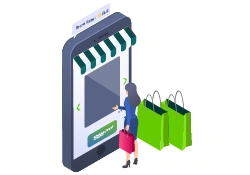
See how a faster, more accurate checkout experience keeps customers coming back.
Enhancing Customer Experience
Customer experience has become one of the strongest competitive differentiators in modern retail. Products and prices can often be replicated by competitors, but memorable shopping experiences create emotional connections that encourage customers to remain loyal.
Today's customer experience extends well beyond the physical store. Customers may browse products online, compare prices on their mobile phones, visit stores to examine products, complete purchases digitally, and expect home delivery or Click & Collect services. Every interaction contributes to the overall customer journey.
Retail Management Systems help retailers create connected experiences by maintaining unified customer information across every shopping channel. Purchase history, shopping preferences, favourite categories, previous returns, loyalty status, and communication history are stored centrally, enabling retailers to understand customers more effectively.
This information enables personalised engagement. Instead of sending generic promotional campaigns, retailers can recommend products based on previous purchases, notify customers about relevant new arrivals, provide birthday offers, or create targeted promotions for high-value customers. Personalised communication demonstrates that the retailer understands customer preferences, strengthening long-term relationships.
Real-time inventory management also plays a vital role in improving customer experience. Nothing frustrates customers more than discovering that a desired product is unavailable after visiting a store or placing an online order. Inventory synchronisation across stores, warehouses, websites, and marketplaces ensures customers always receive accurate stock information.
Order fulfilment has similarly become an important part of customer experience. Customers expect faster deliveries and flexible fulfilment options. Integrated order management enables retailers to fulfil orders from warehouses, nearby stores, or alternative inventory locations depending on availability, reducing delivery times while improving service reliability.
Store associates also benefit from integrated customer information. Access to previous purchase history enables them to make informed product recommendations, assist with exchanges more efficiently, and provide more personalised service. Customers appreciate these tailored interactions because they reduce shopping effort while creating stronger relationships with the brand.
As retailers continue expanding into omnichannel commerce, maintaining consistent customer experiences across physical and digital channels becomes increasingly important. Integrated retail technology provides the operational foundation required to deliver these seamless experiences.
Incorporating Customer Loyalty Programmes
Customer loyalty programmes remain one of the most effective methods for encouraging repeat purchases and strengthening long-term customer relationships. However, modern loyalty programmes have evolved significantly beyond simple reward points.
Today's customers expect loyalty benefits that are personalised, convenient, and immediately valuable. Programmes may include reward points, cashback, exclusive member pricing, birthday rewards, early access to new collections, referral incentives, premium membership tiers, or personalised offers based on shopping behaviour.
The effectiveness of these programmes depends largely on technology integration. A loyalty programme that requires manual calculations or separate systems creates operational complexity and inconsistent customer experiences. Modern Retail Management Systems automatically capture customer information during billing, update loyalty points instantly, apply eligible promotions, and maintain complete transaction histories without additional manual effort.
Integrated loyalty management also enables retailers to understand customer lifetime value, identify high-value customers, evaluate campaign effectiveness, and design targeted retention initiatives. Businesses can reward their most loyal customers while encouraging occasional shoppers to increase purchase frequency through personalised incentives.
Loyalty programmes become even more powerful when combined with omnichannel retail. Customers should be able to earn and redeem rewards regardless of whether purchases are made in physical stores, e-commerce websites, or mobile applications. A unified retail platform ensures loyalty benefits remain consistent across every channel, improving both customer convenience and programme participation.
Ginesys supports retailers by integrating with customer loyalty solutions, enabling businesses to manage reward programmes seamlessly alongside billing, inventory, and customer information. This integration simplifies loyalty management while helping retailers build stronger customer relationships through consistent and personalised engagement.
Providing Exceptional Customer Support
Even the best products and the most efficient retail operations cannot completely eliminate situations where customers require assistance. Products may need to be exchanged due to size or colour preferences, customers may request refunds, orders may be delayed during transit, or they may simply need help locating a product or understanding a warranty. How a retailer responds to these situations often determines whether the customer returns for future purchases.
Exceptional customer support is no longer viewed as a post-sales activity, it has become an integral part of the overall customer experience. Customers expect retailers to resolve issues quickly, provide accurate information, and make support processes simple and convenient. Complicated return procedures, delayed responses, or inconsistent policies can quickly erode customer trust.
A modern Retail Management System simplifies customer service by providing store associates with instant access to customer purchase history, billing records, order details, warranty information, and inventory availability. Instead of manually searching through invoices or contacting multiple departments, customer support teams can access relevant information through a single interface, enabling faster issue resolution.
Integrated Point of Sale (POS) systems also simplify returns and exchanges by validating original purchases, applying refund policies automatically, and updating inventory in real time. This reduces processing time while ensuring inventory records remain accurate.
For omnichannel retailers, customer support becomes even more important because customers expect a consistent experience regardless of where they purchased the product. Whether an order originates from a physical store, an e-commerce website, or another digital sales channel, integrated retail systems help retailers manage returns, exchanges, and customer communication efficiently.
Providing responsive customer support not only resolves immediate issues but also strengthens long-term customer relationships. Customers are far more likely to remain loyal to brands that resolve problems professionally and efficiently.
Omnichannel Retail Strengthens Customer Retention
Today's customers rarely shop through a single channel. They may discover products on social media, compare prices on a retailer's website, visit a physical store to experience the product, complete the purchase through a mobile application, and later request support through messaging platforms. This interconnected shopping behaviour has made omnichannel retail a necessity rather than an option.
Customer retention depends heavily on delivering a consistent experience across every touchpoint. Customers expect product availability, pricing, promotions, loyalty benefits, and customer service to remain consistent regardless of how they interact with the retailer.
An integrated Retail Management System enables businesses to maintain a single source of truth for inventory, customer information, pricing, promotions, and orders. This consistency eliminates confusion while providing customers with greater confidence in the brand.
Omnichannel capabilities such as Click & Collect, Ship from Store, Endless Aisle, Store-to-Store Transfers, and unified customer profiles improve shopping convenience while increasing customer satisfaction. Customers gain greater flexibility in how they shop, receive orders, and interact with the retailer, making them more likely to return for future purchases.
As retail continues evolving towards connected commerce, businesses that successfully integrate physical and digital shopping experiences will be better positioned to retain customers over the long term.
Bring every channel onto one connected platform to keep the customer experience consistent.
Data and Analytics Help Retailers Understand Customers Better
Customer retention is not based on assumptions, it requires a deep understanding of customer behaviour. Modern Retail Management Systems generate valuable business insights by capturing data from every customer interaction, including purchases, returns, browsing patterns, loyalty participation, payment preferences, and promotional responses.
Advanced analytics enable retailers to identify high-value customers, measure customer lifetime value, evaluate repeat purchase behaviour, and understand which products or campaigns drive the highest engagement. Rather than creating generic marketing campaigns, businesses can segment customers based on purchasing behaviour and deliver more relevant communication.
For example, retailers can identify customers who have not made a purchase for several months and proactively engage them with personalised offers. Similarly, businesses can reward frequent shoppers with exclusive benefits while encouraging occasional customers to increase their purchase frequency through targeted campaigns.
Analytics also improves operational decisions. Understanding customer demand helps optimise inventory planning, merchandising strategies, promotional timing, and product assortment. Better alignment between customer preferences and inventory availability contributes directly to higher customer satisfaction and improved retention.

See how deeper customer analytics can sharpen every retention campaign.
The Role of CRM in Customer Retention
Customer Relationship Management (CRM) has become an essential component of modern retail. Instead of viewing each purchase as an isolated transaction, CRM enables retailers to build long-term relationships by maintaining a comprehensive view of every customer.
A connected CRM system records purchase history, communication preferences, loyalty status, service interactions, birthdays, anniversaries, and customer feedback. This information enables retailers to personalise every stage of the customer journey.
Personalised communication has become increasingly important as customers expect brands to recognise their individual preferences. Retailers can recommend complementary products, notify customers about relevant product launches, send personalised offers, and celebrate important milestones such as birthdays or membership anniversaries.
CRM also supports customer retention by helping businesses identify customers at risk of disengagement. Automated communication workflows can re-engage inactive customers with relevant offers, helping retailers strengthen relationships before customers switch to competing brands.
How Ginesys Helps Retailers Improve Customer Retention
Customer retention depends on much more than offering discounts or loyalty rewards. It requires retailers to connect customer engagement with operational efficiency, inventory accuracy, order fulfilment, and business intelligence. This is where the integrated Ginesys retail ecosystem provides significant value.
Ginesys suite brings together Point of Sale (POS), inventory management, warehouse management, omnichannel retail, order management, analytics, and customer information into a unified platform. Rather than operating disconnected systems, retailers gain complete visibility across their operations while delivering a more consistent customer experience.
The Ginesys POS enables retailers to capture customer information during billing, maintain purchase history, and support personalised engagement. Faster billing, multiple payment options, and integrated customer profiles contribute to smoother shopping experiences while reducing checkout times.
Real-time inventory management ensures accurate stock availability across stores, warehouses, and digital channels. This reduces stockouts, prevents overselling, and enables retailers to fulfil customer orders more efficiently. Customers benefit from accurate inventory information, while businesses improve operational efficiency.
Ginesys also supports integration with customer loyalty programmes, allowing retailers to automate reward accumulation, redemption, and promotional campaigns without disrupting day-to-day operations. Combined with customer analytics, retailers can design targeted campaigns based on actual purchasing behaviour rather than assumptions.
The platform's omnichannel capabilities further strengthen customer retention by enabling businesses to provide consistent shopping experiences across physical stores, e-commerce websites, marketplaces, and other connected sales channels. Customers can interact with the brand seamlessly while retailers maintain centralised customer and inventory information.
Additionally, business intelligence and reporting tools within the Ginesys ecosystem help retailers monitor customer behaviour, evaluate retention initiatives, analyse sales performance, and make informed strategic decisions based on real-time operational data.

See how Ginesys connects every retention lever, from POS to loyalty to analytics, in one platform.
Future Trends in Customer Retention
Customer retention strategies will continue evolving as technology advances and customer expectations increase. Artificial Intelligence (AI) is already helping retailers predict customer behaviour, personalise product recommendations, and automate marketing campaigns based on purchasing patterns.
Predictive analytics enables businesses to identify customers who may be at risk of leaving and proactively engage them with relevant offers before they become inactive. Machine learning continuously improves recommendation accuracy, creating increasingly personalised shopping experiences.
Mobile commerce will also continue shaping customer engagement. Digital loyalty cards, mobile wallets, personalised notifications, and app-based rewards will make customer interactions more convenient while increasing programme participation.
Retailers are also placing greater emphasis on experiential loyalty rather than discounts alone. Exclusive product launches, members-only events, personalised shopping consultations, and premium services are becoming important differentiators that strengthen emotional connections with customers.
Sustainability and ethical retailing are emerging as additional loyalty drivers. Customers increasingly prefer brands that demonstrate responsible sourcing, environmentally conscious operations, and transparent business practices. Retailers that combine operational excellence with meaningful customer engagement will be better positioned to build long-term loyalty.
Customer retention remains one of the most effective strategies for achieving sustainable retail growth. While attracting new customers will always be important, long-term profitability depends on building meaningful relationships that encourage customers to return repeatedly and advocate for the brand.
Modern Retail Management Systems have transformed customer retention by integrating customer information, inventory management, Point of Sale, loyalty programmes, CRM, order management, and analytics into a single connected platform. This enables retailers to deliver personalised experiences, maintain accurate inventory, streamline operations, and respond more effectively to customer expectations.
For retailers operating in today's omnichannel environment, technology is no longer simply a tool for managing operations, it is the foundation for creating exceptional customer experiences. By investing in an integrated retail platform such as Ginesys, businesses can strengthen customer relationships, improve operational efficiency, and build scalable customer retention strategies that support long-term business success.
Frequently Asked Questions (FAQs)
Why is customer retention important in retail?
Customer retention helps retailers increase repeat purchases, improve customer lifetime value, reduce marketing costs, and generate stable long-term revenue through loyal customers.
How does a Retail Management System improve customer retention?
It integrates POS, inventory, CRM, loyalty programmes, order management, and analytics to deliver faster service, personalised experiences, accurate inventory, and seamless shopping across channels.
What role does inventory management play in customer retention?
Real-time inventory management ensures customers receive accurate product availability, reduces stockouts, prevents cancelled orders, and improves overall shopping satisfaction.
How do loyalty programmes contribute to customer retention?
Loyalty programmes encourage repeat purchases through rewards, personalised offers, exclusive benefits, cashback, and membership privileges that strengthen long-term customer relationships.
How does Ginesys help retailers retain customers?
The Ginesys suite integrates Retail ERP, POS, inventory management, omnichannel commerce, warehouse operations, customer analytics, and loyalty integrations, enabling retailers to deliver consistent customer experiences while improving operational efficiency.
Why is omnichannel retail important for customer retention?
Customers expect a seamless experience across physical stores, websites, mobile apps, and marketplaces. Omnichannel retail ensures consistent pricing, inventory visibility, loyalty benefits, and customer service across every touchpoint.
How can analytics improve customer retention?
Retail analytics help businesses understand purchasing behaviour, identify high-value customers, personalise marketing campaigns, optimise inventory, and proactively engage customers, leading to stronger loyalty and higher repeat sales.