How Modern Supermarket Software Masters Volume, Variety and Speed
Published:
Last Updated:
Walk into any hypermarket on a Saturday afternoon and experience the glaring chaos. Twenty checkout counters run simultaneously, each processing 200+ transactions before the shift ends. Fresh produce that needs to be moved before it spoils. Electronics with serial numbers. Promotions change by the hour. Then your smartphone network drops.
This is supermarket reality, and it's where most POS systems break down. A store processing 20,000 daily transactions across 50,000 SKUs can't afford a system that freezes during peak hours or takes three hours to sync inventory.
What separates supermarkets that scale from those constantly firefighting: a POS core that handles operational complexity underneath. Fast checkout is table stakes. What matters is managing massive product catalogues without slowing down, updating inventory the moment a customer pays, pushing pricing changes to 15 stores at once, and keeping billing active when the network goes down.

How Does Modern Supermarket Software Handle High-Volume Billing with Accuracy and Speed?
Here's what happens when your POS can't keep up: queues stretch into aisles, customers abandon carts, and your Saturday revenue target slips away while cashiers restart frozen terminals.
The difference between a system that handles 15 transactions per minute and one that does 25 isn't technical; it's financial. Those extra 10 transactions per counter add up to thousands of customers served during peak hours versus thousands walking out frustrated.
Good supermarket software distributes transaction load across multiple tills without creating bottlenecks. When 30 counters are firing at once during festival season, the system processes each sale independently and syncs to central inventory in the background. No lag, no freezing, no "system is slow" excuses.
The billing engine itself needs to be fast where it counts. Barcode lookup shouldn't take more than a split second, even when you're searching through 80,000 SKUs. Pricing calculations including GST, discounts, and loyalty points happen instantly. Payment gateway integration is direct, not routed through clunky third-party aggregators that add two seconds to every transaction.
And here's the part most people overlook until it bites them: offline capability. Your internet will go down. Maybe it's your ISP, maybe it's the fiber line someone cut while digging up the road. When that happens, a proper POS keeps billing using cached product data and queues transactions for sync. You don't lose an hour of revenue while customers stand around waiting for "the connection to come back."
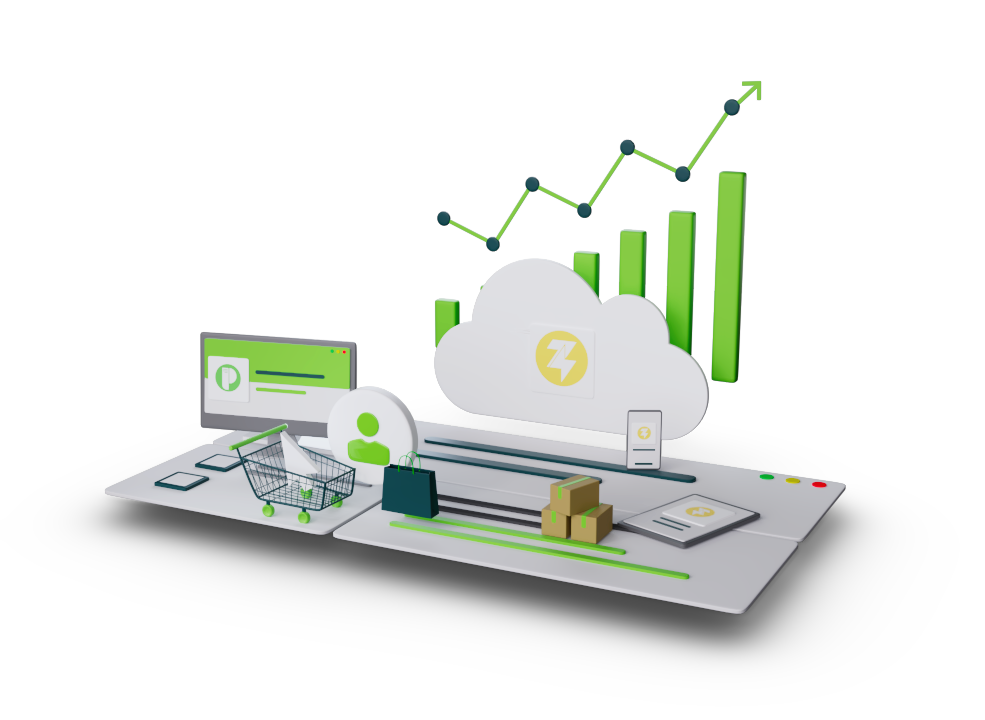
Billing speed directly impacts revenue during peak hours. Systems that slow down under load quietly cap how much a store can earn.
How Can Supermarkets Manage Thousands of SKUs Using Intelligent and Scalable Product Catalogues?
Try managing 60,000 SKUs in a spreadsheet, and you'll understand why most supermarkets struggle with their item master. You're not just storing product names; you've got variants (12 pack sizes of the same rice brand), barcodes (manufacturer EAN, internal PLU, weighted codes for produce), suppliers who change packaging every quarter, and new products arriving weekly.
The architecture matters here. Hierarchical catalogues organize products in layers:
Department > Category > Brand > Item > Variant.
This isn't just about keeping things tidy. When a cashier needs to find "Basmati Rice" during billing, they can drill down through categories instead of typing keywords into a search box and hoping the right SKU appears.
This structure also makes bulk operations possible. Need to apply a 10% markup to all cooking oils? Update the entire category at once instead of editing 200 individual items. Running a dairy promotion? Select the category and push it to all stores.
Barcode handling gets messy fast. You've got standard EAN codes from manufacturers, weighted barcodes for items sold by kilo, internal codes for store-prepared items, and promotional bundle codes. Your system needs to recognize all of them instantly and handle scenarios where one product has three different valid barcodes.
For chains operating in multiple cities, there's another layer: regional variations. Mumbai stores stock different brands than Bangalore stores because customer preferences differ. But you still need one central item master that supports location-specific catalogues without creating duplicate SKUs that mess up inventory reporting.
Poor item master design creates daily friction, slower checkouts, cashier errors when selecting variants, nightmare inventory reports, and promotional campaigns that break because the SKU structure doesn't support the rules you're trying to apply.
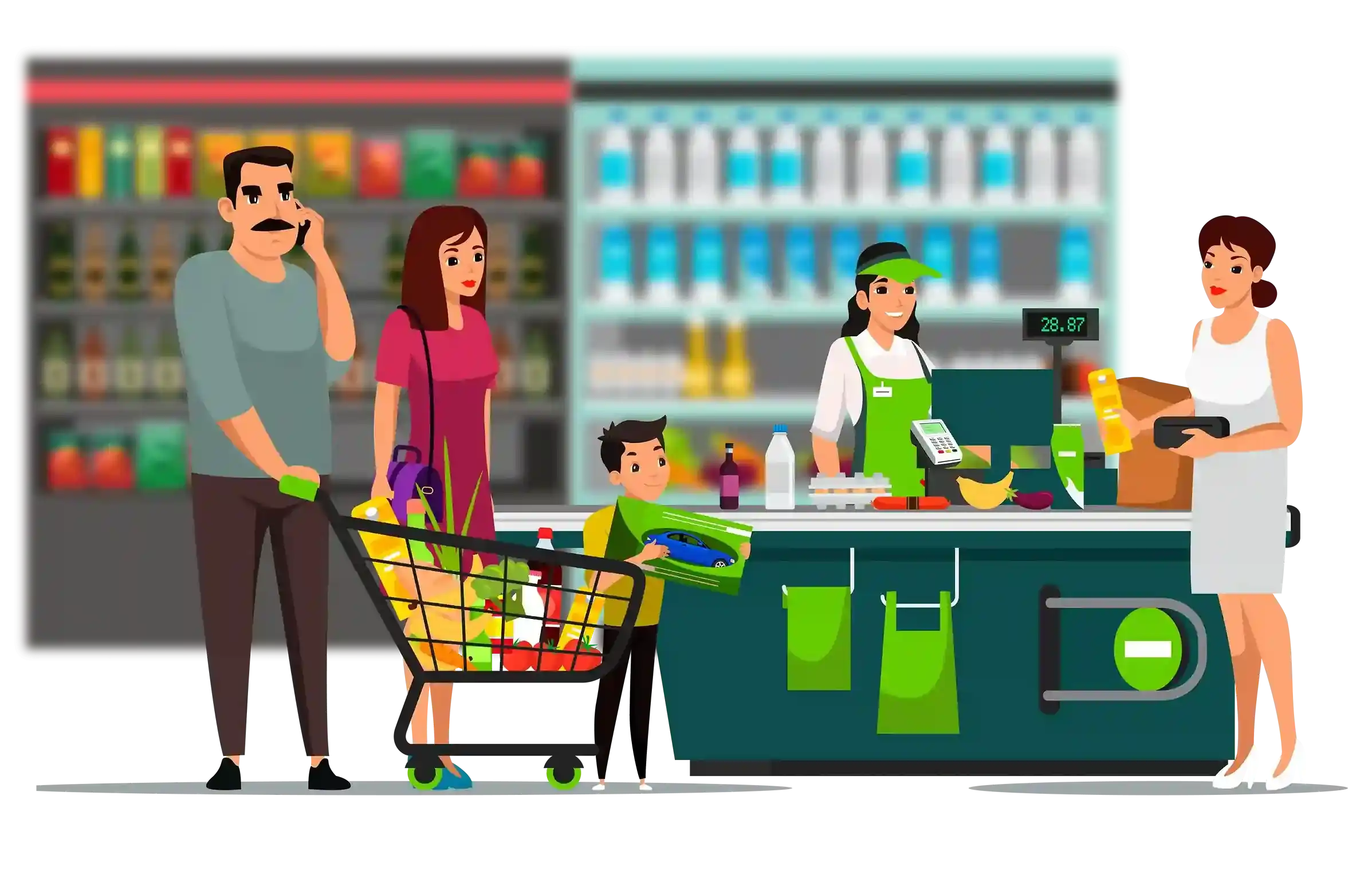
Supermarket growth isn’t limited by footfall or assortment. It’s limited by whether core systems can handle peak load without breaking down.
What Enables Faster Checkouts That Reduce Queues and Improve Customer Satisfaction?
Queue length determines whether customers come back. Research shows people overestimate wait time by roughly 30%, and once someone's had a bad checkout experience, they'll try your competitor next time.
Fast checkout depends on several things working together. Barcode scanning needs sub-second response time even when searching for 50,000+ products. Payment terminal integration should direct the amount flows from POS to card reader automatically, no manual entry. Digital wallets, UPI, cards all processed through the same seamless flow.
The interface design matters more than people realize. A well-designed POS lets cashiers use keyboard shortcuts instead of clicking through menus. Customer-facing displays show itemized bills clearly. Exception handling wrong barcode scan; price override requests doesn't require supervisor intervention for routine cases.
Offline support is critical. When connectivity drops, you can't just tell customers "Sorry, the system's down, come back later." Systems with local caching continue billing and sync transactions once the connection returns. Your customers don't know there was a network problem, and that's exactly how it should be.
Why is Real-Time Inventory Visibility Essential for Smarter Replenishment in Supermarkets?
Stale inventory data costs money in both ways. Stock out of a fast-moving item; the business might lose immediate sales. Overstock slow movers and capital get tied up, with expiry losses hitting the hardest in categories like fresh produce and dairy.
End-of-day inventory updates only compound the issue. By the time yesterday’s closing stock is reviewed, popular items may already be sold through, and critical reorder windows are missed.
Real-time systems update inventory the moment a customer pays. That 5kg rice bag leaves the shelf; the count drops instantly across POS, warehouse, and procurement modules. This immediacy enables automated replenishment; the system monitors stock levels continuously and triggers purchase orders when inventory hits predefined thresholds.
For multi-store chains, real-time visibility solves another problem: unbalanced inventory. Store A stocks out while Store B has excess. With live data, the head office can initiate inter-store transfers before you lose sales. This is particularly valuable during promotions when demand spikes unexpectedly.
The financial impact is direct. Better turnover ratios, fewer stockouts, lower carrying costs. For a chain holding ₹100 crore in inventory, even a 5% improvement in turnover creates substantial working capital benefits.
How Does Centralised Control Improve Multi-Store Supermarket Operations?
Running 15 stores with inconsistent pricing is a nightmare. Customers notice when the same item costs different amounts at different locations. Promotions that launch late at some stores. Store managers implement their own discount policies that erode margins.
Centralised control means the head office defines pricing, promotions, and permissions once, then pushes them to all locations simultaneously. When supplier costs change or you need to clear aging inventory, update pricing centrally and it flows to every store.
Promotion management especially benefits. Configure buy-two-get-one offers, or bundle deals once, deploy to selected stores, and the system applies discounts automatically at checkout. User access control follows the same pattern: store managers approve small refunds; regional managers have broader authority, head office controls pricing.
GST compliance makes centralized tax management critical in India. Configure GST rates centrally, ensure correct application across all stores, and simplify return filing when rates change.
Beyond consistency, centralization provides visibility. Dashboards show comparative sales, inventory turnover, and shrinkage across locations helping identify underperforming stores and practices worth replicating chain wide.
How Do Seamless ERP Integrations Create Unified Retail Management for Supermarkets?
POS doesn't operate alone. You've got ERP handling finance and procurement, warehouse systems managing stock movements, and potentially e-commerce platforms. The question is whether these systems talk to each other or operate in silos.
Siloed systems create a mess. Sales data gets exported to Excel, manually imported into ERP. Purchase orders created in procurement don't update expected inventory in POS. Customer data from checkout isn't accessible to marketing teams. Every manual handoff introduces errors and delays.
Integrated systems eliminate this. When a sale completes at checkout, transaction details flow automatically to ERP updating accounts receivable, inventory, cost of goods sold, and GST compliance data simultaneously. No manual export, no batch processing at day-end, no reconciliation headaches.
In reverse, purchase orders created in ERP flow to warehouse and POS modules. Warehouse teams match incoming goods against expected receipts, generate GRNs that update inventory, and notify stores that new stock is ready. The entire loop closes without manual coordination.
For finance teams, integration transforms month-end closing. Instead of consolidating sales data from multiple stores manually, the ERP already contains transaction-level data synced continuously. Financial reports are generated directly from the system. GST returns are simpler because the system maintains detailed records of taxable sales and input credits.
Warehouse integration enables inter-store transfers moving excess inventory from one location to replenish stockouts at another. The system tracks transfer orders from creation through dispatch and receipt, updating inventory balances at both locations automatically.
Platforms like Ginesys handle this through unified architecture where POS, ERP, and warehouse modules share databases rather than connecting through fragile APIs. All modules access the same item masters and transaction data, ensuring consistency while supporting specialized workflows.

Supermarkets scale smoothly when POS, inventory, and ERP operate as one system instead of stitched-together tools.
How Do Promotions, Pricing Engines, and Loyalty Programmes Drive Supermarket Sales?
Pricing strategy in supermarkets is constantly balancing drive traffic without killing margins, clear old stock without training customers to only buy on discount, compete on price without starting wars.
Dynamic pricing engines let you execute complex strategies: markdown schedules for items approaching expiry, quantity discounts (buy 3 get 1 free), bundle pricing, time-based promotions, member-exclusive deals. The system calculates final prices at checkout automatically without cashier intervention.
The challenge is handling combinations. Customer buys an item on quantity discount who's also a loyalty member with which discount applies? Bundle includes items individually on clearance. How's the bundle priced? Systems need clear rule hierarchies to resolve conflicts consistently.
Loyalty programs add another layer. Points accrual, bonus events, redemption against purchases, tiered memberships. Integration between POS and loyalty must be seamless. Customers identify themselves; the system applies member pricing and benefits automatically; points credit in real-time.
The data from loyalty programs feeds merchandising decisions. Which customer segments respond to which promotions? Which categories drive frequency versus basket size? Platforms that capture this data and make it accessible turn loyalty from a cost center into a strategic asset.
For omnichannel retailers, pricing must stay consistent across stores and e-commerce. A promotion advertised on your app needs to be applied correctly at checkout. This requires synchronized promotional rules across channels, which integrated platforms handle better than stitched-together systems.
Ginesys One: A Scalable POS Core Built for Supermarket Reality
The capabilities outlined above aren't separate features; they're interconnected parts of a complete platform. Trying to assemble them through different vendors creates integration nightmares.
Ginesys One addresses this through unified architecture built for Indian retail. The POS handles peak volumes without lag, concurrent billing across 50+ counters, complex transactions processed in seconds, offline capability during connectivity issues.
Inventory syncs in real-time across POS, warehouse, and ERP. The item master supports 100,000+ SKUs with hierarchical organisation that speeds lookup and enables bulk operations.
Centralised control lets head offices manage pricing, promotions, and permissions across locations. Because POS and ERP are built on the same platform, data flows automatically with no custom APIs, no synchronization delays.
The promotion engine handles multi-buy offers, bundles, and tiered discounts. Loyalty integration tracks points in real-time. Analytics show sales velocity, basket composition, and store performance.
For chains expanding into e-commerce, Ginesys unifies online and offline inventory with real-time updates. It's built for India GST compliance, UPI support, regional language options.
Contact us to know more.
Conclusion
The supermarket chains that scale successfully versus those constantly firefighting usually differ in one area: whether their core systems can handle daily operational complexity.
For retail heads evaluating technology, the questions worth asking are essentially these: Can the system handle your peak volumes? Does it provide inventory visibility in real-time? Can you enforce policies centrally while supporting local flexibility? Does integration happen natively or through fragile connections?
Technology isn't just an operational expense; its infrastructure that either enables growth or constrains it. Choose platforms built for supermarket reality, not idealized versions of how retail should work.
FAQs
1. What makes a POS system "scalable" for supermarket operations?
Scalability means the system handles increasing transaction volumes, store locations, and SKU counts without slowing down. It processes 50+ concurrent checkouts during peak hours, manages 100,000+ SKUs without lag, and includes offline billing so connectivity issues don't stop sales.
2. How does real-time inventory visibility differ from end-of-day reporting?
Real-time systems update stock levels instantly with every sale, return, or receipt giving current visibility throughout the day. End-of-day systems batch-process changes once daily, so the data managers see is already hours outdated when they need to make replenishment decisions.
3. Why is offline POS capability important even with reliable internet?
Internet outages happen ISP issues, power failures, infrastructure problems. Offline-capable systems keep billing using cached data and sync transactions when connectivity returns, preventing revenue loss during outages that might only last an hour but cost lakhs in lost sales.
4. What are the key integration points between POS and ERP systems?
Critical integrations include sales data flowing to ERP for financial reporting, inventory updates syncing between systems, purchase orders from ERP reaching POS for receipt tracking, and GST data captured at checkout feeding compliance modules. Native integration eliminates synchronization delays and data errors.
5. How do centralised promotional engines prevent execution errors?
Centralised engines let head offices define promotion rules once discount logic, qualifying items, date ranges then deploy to all stores simultaneously. The system applies discounts automatically at checkout, eliminating manual entry errors and ensuring customers get the same promotion experience at every location.
6. What SKU management challenges arise when supermarkets scale beyond 50,000 products?
Large catalogues create slower item lookups, difficulty organizing products logically, complexity managing variants and pack sizes, and increased data entry burden. Hierarchical item masters with multi-level categorization solve this through efficient search and bulk category operations.